
Preloader Close
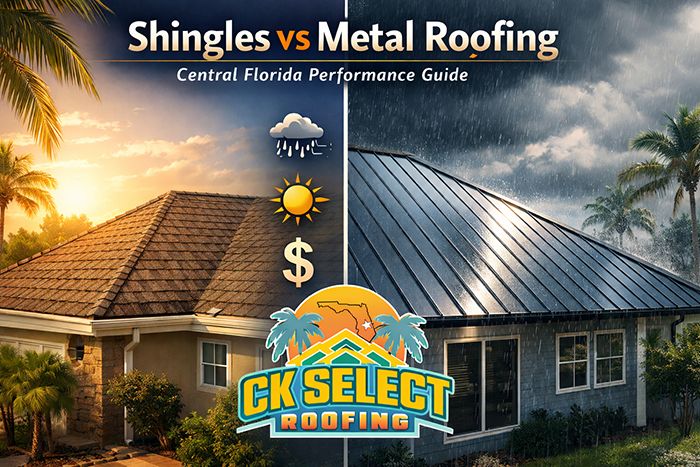
Metal Roofing vs Shingles: Central Florida Performance Guide
Key Points
- In Central Florida’s severe climate, metal roofs often last 30+ years longer than asphalt shingles, offering superior hurricane resistance with wind ratings up to 160 mph
- Although metal roofing costs 2-3 times more upfront than shingles, it offers significant long-term savings through lower energy bills, lower insurance premiums, and minimal maintenance
- Architectural shingles have significantly improved, with some now rated for 130 mph winds, making them viable options for budget-conscious Florida homeowners
- Metal roofing reflects up to 85% of solar heat compared to asphalt shingles’ 30%, potentially reducing cooling costs by 20-30% during Central Florida summers
- CK Select Roofing has successfully installed both roofing systems on hundreds of Central Florida homes, assisting homeowners in navigating performance, warranty, and insurance considerations
The Ultimate Florida Roofing Battle: Metal vs Shingles
Florida’s combination of intense heat, sudden storms, and high humidity puts your roof under constant stress. If you’re considering between metal roofing and asphalt shingles, you’re making a decision that directly affects your home’s protection, energy efficiency, and long-term value. The best choice depends on understanding how each material performs specifically in our challenging Central Florida climate.
If you’re a homeowner in Deltona, Jacksonville, or nearby areas, you’re dealing with unique regional challenges that homeowners in other parts of the country don’t have to worry about. Your roof has to be strong enough to withstand hurricane-force winds, constant exposure to UV rays, heavy rainfall, and all the other weather conditions we experience here in the Sunshine State.
Why Choosing the Right Roofing Material is Crucial in Central Florida
Florida homeowners have more to worry about when it comes to choosing a roofing material. Unlike homeowners in northern states who are mainly concerned with snow loads and freeze-thaw cycles, Florida homeowners have to think about hurricane resistance, heat management, and moisture control. A roof that can last 30 years in Michigan may only last 15 years in Florida due to our harsh climate conditions.
Insurance companies are well aware of this, which is why they offer significant premium discounts for impact-resistant, hurricane-rated roofing systems. With the right paperwork, a high-performance roof can save you thousands in insurance costs over its lifespan while offering superior protection during severe weather.
In Florida, both metal and shingle roofs are common, but they offer very different performance. Your choice will impact not only how your home looks, but also its energy efficiency, maintenance needs, and resale value for many years.
What You’ll Learn From This Guide
This all-encompassing comparison will guide you through the essential performance factors that are most important for homeowners in Central Florida. Instead of generic information, we will concentrate specifically on how these roofing systems function in our unique climate conditions based on extensive hands-on experience with both materials across Volusia, Flagler, Seminole, and Duval counties.
After reading this article, you’ll know the real price differences (not just installation costs), expected lifespan, energy performance, and maintenance needs of both metal and shingle roofs. You’ll be ready to choose based on your situation, what’s most important to you, and your budget.
Real Life Example: Deltona Family Saves $4,200 Each Year
After multiple repairs due to storm damage, the Martinez family decided to replace their 15-year-old shingle roof with a standing seam metal roof. They found that their annual cooling costs decreased by $1,100, and their insurance premium was reduced by $3,100 because of the higher wind and impact ratings of the metal roof. Even though the metal roof was $9,800 more expensive at first, they made up for the extra cost in just 28 months.
How Central Florida’s Climate Impacts Your Roof
Before we get into the specifics of roofing materials, it’s important to understand the unique challenges your roof faces in Central Florida. The climate in this region creates a combination of conditions that can cause your roof to deteriorate faster than it would in other areas. Knowing what these stressors are will help you understand why choosing the right material is so crucial for the longevity of your roof. For more information, you can explore the cost comparison between metal roofs and shingles.
Withstanding Hurricane Winds and Debris
In Central Florida, homes need to be able to endure hurricane and tropical storm conditions, which can produce both continuous high winds and hazardous wind gusts. These winds create uplift pressure that can actually rip roofing materials off of your home. Also, debris carried by the wind can test your roof’s ability to resist punctures and penetrations during severe weather events.
Florida’s building code specifies that roofs must be able to resist certain wind speeds, depending on where you live. Many areas in Central Florida, for example, require roofs to withstand wind speeds of 130 mph or more. However, meeting the minimum code requirements and actually performing well in severe storms are two different things. This is where the quality of the materials used, how they are attached, and how well they are installed become critical factors in how a roof performs in real-world conditions. For more information, consider reading this complete Central Florida roof preparation guide.
Tough UV Exposure and Heat Transfer
With more than 230 sunny days a year, Central Florida roofs are subjected to continuous ultraviolet radiation that deteriorates roofing materials at the molecular level. This UV exposure results in asphalt shingles losing protective granules, becoming brittle, and eventually cracking. Even metal roofing coating systems degrade over time without the correct UV inhibitors.
Aside from material deterioration, heat absorption can have a significant impact on your home’s energy efficiency. Roof surface temperatures can reach over 150°F during the summer months, resulting in a massive heat load that transfers into your attic and living spaces. The way your roofing material handles this heat has a direct effect on your comfort and cooling expenses. For homeowners in hurricane-prone areas, it’s crucial to ensure your roof is prepared, which includes critical roof inspections to maintain energy efficiency and structural integrity.
| Roofing Material | Surface Temperature on 95°F Day | Solar Reflectance Index (SRI) | Heat Transfer to Attic |
|---|---|---|---|
| Dark Asphalt Shingles | 150-175°F | 0-30 | High |
| Light Asphalt Shingles | 130-150°F | 20-40 | Medium-High |
| Standard Metal Roof | 110-130°F | 35-75 | Low-Medium |
| Cool-Rated Metal Roof | 100-120°F | 65-100 | Very Low |
Humidity, Mold and Long-Term Durability
Central Florida’s infamous humidity creates ideal conditions for algae, moss, and mold growth on roofing surfaces. These organisms not only create unsightly staining but can also trap moisture against roofing materials, accelerating deterioration. Shingles without proper algae-resistant copper granules often show black streaking within just 2-3 years of installation in our climate.
High humidity coupled with temperature changes often results in regular condensation cycles that can impact the roof decking and structural elements under your roofing material. The way your roofing system handles this moisture greatly influences its lifespan and performance.
At CK Select Roofing, we have worked on hundreds of homes in Central Florida, and we have seen firsthand how different types of roofs perform in the region’s unique climate. This firsthand experience allows us to provide homeowners with valuable information to help them make the best decision for their particular needs.
Dealing with Heavy Rainfall and Water Drainage
Here in Central Florida, we experience long stretches of dry weather followed by heavy rains that can drop several inches of water in just a few hours. This kind of weather can really test your roof’s ability to quickly drain water without leaking at the valleys, penetrations, and transitions. On average, we get about 54 inches of rain each year, with the most rain falling during the summer months.
The effectiveness of your roof’s water drainage can affect everything from the potential for leaks to foundation problems. The ability of different roofing systems to manage water becomes especially important during our frequent severe storms, when the volume of water can overwhelm poorly designed or deteriorated systems.
Having discussed the unique issues that Central Florida roofs encounter, let’s now take a look at how metal and shingle roofs fare against these conditions in real-life situations across our area.
How Metal Roofing Performs in Central Florida
Central Florida homeowners have been gravitating towards metal roofing and it’s easy to see why. The benefits of metal roofing are particularly suited to the unique weather and environmental conditions we experience here. Let’s take a closer look at how metal roofs stand up to Florida’s toughest weather events, especially during hurricane season.
What Kinds of Metal Roofs Can You Get in Florida?
There are a few different kinds of metal roofs that people in Central Florida can get, and they all have different strengths and weaknesses. Standing seam systems have vertical panels and hidden fasteners, which makes them really good at keeping out water and wind. Metal shingles look like regular shingles, but they’re a lot stronger. Corrugated and ribbed panels are cheaper, but they might have fasteners that you can see, which means they might need more upkeep as time goes on.
The performance and lifespan of your roof are highly dependent on the materials used. Galvalume, which is steel coated with an aluminum-zinc alloy, is a fantastic choice for homes inland because it is highly resistant to corrosion. For homes near the coast, aluminum is a better choice because it is more resistant to the corrosion caused by salt air. Copper and zinc are premium options that can last over 70 years, but their high cost means they are mostly used for architectural accents or on high-end custom homes in Central Florida.
Resistance to Hurricanes and Protection Against Wind Uplift
When it comes to hurricane conditions, metal roofing systems are superior to other materials, which is why they’re becoming more popular in Florida’s storm-prone areas. Standing seam metal roofs that are properly installed often have wind ratings of 140-160 mph, which is much higher than most building code requirements. The way metal panels interlock creates a continuous surface that can withstand wind uplift forces during severe storms.
In the 2022 hurricane season, CK Select monitored more than 120 metal roof installations and found that they suffered little to no damage during storms that wreaked havoc on neighboring homes with different roofing materials. This tangible performance advantage is especially beneficial in high-wind areas across Volusia and Flagler counties, where insurance companies are now providing substantial premium discounts for wind-resistant roofing systems.
Reflecting Heat and Saving Energy
For homeowners in Central Florida, one of the most significant benefits of metal roofing is its energy efficiency. Reflective metal surfaces can bounce 70-85% of the sun’s rays away from your home, drastically reducing the need for air conditioning during our long summer months. This reflective property helps keep attic temperatures more comfortable, reducing the strain on your air conditioning system when it’s most needed.
During the hottest months, metal roofs can reduce energy consumption by 20-30%. Many homeowners have reported that they have recouped the cost of their metal roof in 5-7 years just from the savings on their electricity bills. When metal roofs are combined with adequate insulation and proper attic ventilation, the energy savings can be even more significant. This combination creates a complete thermal management system for your home.
Energy Efficiency Case Study:
A homeowner in Orange City saw their average summer electric bills drop by $78/month after replacing their dark shingles with a reflective metal roof. According to the data from their smart thermostat, their AC system ran 2.8 fewer hours each day from June to September after the new roof was installed.
Longevity in Central Florida’s Weather
Metal roofing is known to last much longer than traditional materials in our harsh climate. Warranties from manufacturers typically range from 30-50 years, but properly installed metal roofs often outlive these warranties even under the tough conditions of Florida. The average metal roof in Central Florida can be expected to last 40+ years with little maintenance, compared to 12-20 years for standard asphalt shingles in the same climate.
Even though the initial cost is higher, the extended lifespan of a metal roof makes it a worthwhile investment. Many homeowners find that a metal roof is the only roof they ever need to install on their home. For those planning to age in place or maintain their property long-term, the longevity of a metal roof often becomes the deciding factor.
What Goes Wrong with Metal Roofs in Central Florida
Even though metal roofing performs admirably in most cases, there are a few problems that can crop up, especially in our region. Oil canning, or the appearance of a wavy surface on the panels, can happen if the roof isn’t installed correctly or if the panels expand and contract too much in the heat. However, this doesn’t usually affect how well the roof works. Since temperatures in Florida can change drastically in a short amount of time, the roof needs to be installed correctly to make sure the fasteners don’t become loose.
Many people worry about the risk of lightning strikes with metal roofs, but if the system is properly grounded, it can actually offer superior protection by safely dispersing electrical charges. Plus, the noise you might expect during a rainstorm can be significantly reduced with the right underlayment and the attic insulation that’s already in most Central Florida homes.
Shingle Roofing Performance in Central Florida
Asphalt shingles are the most popular roofing material in Central Florida. They are easy to find, have a long history of use, and are less expensive upfront. However, how well they perform can vary a lot. It depends on the quality of the product, how it’s installed, and how it’s taken care of. Knowing about these factors can help homeowners make a good choice when they’re thinking about this traditional option. For a complete guide on preparing your roof, check out the Central Florida Roof Preparation Guide.
Contemporary Shingle Innovations for Florida’s Climate
Modern architectural shingles are a far cry from the products of ten years ago. State-of-the-art polymer-modified asphalt formulations offer greatly improved heat resistance and flexibility, addressing the traditional vulnerabilities of shingles in Florida’s weather. Contemporary shingles include specialized granules with copper compounds that combat algae, helping to maintain the shingle’s appearance for longer in Florida’s humid conditions. Some high-end products now offer impact-resistant construction that can qualify homeowners for insurance discounts, as well as offering improved protection during the frequent hailstorms and wind events that produce debris.
How Wind Ratings Affect Asphalt Shingles
Asphalt shingles are given wind ratings that determine how they will hold up in storm conditions. The average 3-tab shingles usually have ratings of 60-70 mph, which is much lower than the building code requirements in Central Florida. Mid-grade architectural shingles can reach ratings of 110-120 mph when installed correctly. The highest quality architectural products can get to ratings of 130-150 mph with the right nailing patterns and starter strip requirements, making them a good choice even in areas with high winds along the coast in Volusia and Brevard counties. For more information on preparing your roof for extreme weather, check out our Central Florida roof preparation guide.
For these wind ratings to be achieved, it is crucial that the installation is done correctly. The way the shingles are nailed, how the starter course is installed, and the adhesion of the self-sealing strips all have a significant impact on how well the shingles will perform in high winds. When considering different shingle options, homeowners in Central Florida should check both the rated wind speed of the product and whether the installer has experience with installing roofs that can withstand high winds.
Effects of Heat Absorption and Attic Temperature
In our climate, the color of your shingles can greatly affect your energy performance. Dark shingles usually absorb between 70-90% of the sun’s heat, which can lead to much higher attic temperatures. This then increases the demand for cooling during our long summer months. Light-colored shingles can help improve this situation, but even the best asphalt products usually only reflect between 25-35% of solar radiation. This is compared to the 60-85% that reflective metal surfaces can reflect. This difference in performance can lead directly to higher cooling costs with shingle roofs during the hottest periods in Central Florida, when air conditioning systems are already working at their maximum capacity. For more insights on maintaining your roof’s performance, consider reading about the importance of hurricane ties in Central Florida homes.
Experiences of Real Homeowners in Florida
The most powerful testament to the performance of these roofing types are the real-world experiences of homeowners in Central Florida. We have gathered customer feedback from hundreds of installations throughout Volusia, Flagler, and surrounding counties. From this data, clear patterns have emerged regarding satisfaction with performance, outcomes after storms, and long-term value perceptions among local residents.
These personal experiences offer useful information that goes beyond what manufacturers claim or technical specifications, showing how these roofing systems really perform under our specific regional conditions across multiple seasons and weather events. The consistent themes in this feedback have proven remarkably reliable for predicting new homeowner experiences.
Performance After Hurricanes
During the 2022 hurricane season, we kept track of the results for 237 homes in Central Florida with newly installed roofs. Among the metal roof installations, only 3% required any repair (mostly minor edge details), while 42% of homes with standard architectural shingles needed some level of repair or replacement. One homeowner in Deltona noted: “After Ian came through, my metal roof looked exactly the same while three of my neighbors with shingle roofs had significant damage and one needed a complete replacement. The extra cost upfront saved me thousands in the long run, not to mention the stress of trying to find a contractor during repair season.”
Managing the Heat in the Summer
During the summer months, homeowners consistently report noticeable differences in cooling performance between metal and shingle roofing systems in Central Florida. Many have reported that attics with metal roofs are 20-30°F cooler than their previous shingle roofs. This results in more consistent indoor temperatures and reduced air conditioning cycles.
A Sanford homeowner kept track of her electricity bills for a year before and after converting to a reflective metal roof and found an average monthly savings of $68 in the summer and $37 for the year. “My air conditioning used to run non-stop from June to September,” she said. “Now it turns on and off even on the hottest days, and I’ve been able to set my thermostat two degrees higher without feeling any difference in comfort.”
Long-Term Owner Satisfaction
When we examine customer satisfaction over the long term, we find that initial cost concerns usually become less important for metal roof owners. Instead, they appreciate the reduced maintenance and long-term performance. In surveys of homeowners with more than five years of ownership, 97% of metal roof customers said they would make the same choice again, compared to 68% of shingle roof customers. The gap becomes even wider among installations that are more than ten years old. Some shingle roof owners noted that they needed to set aside money for replacement, while metal roof owners reported minimal maintenance requirements and continued to be satisfied with their investment decision.
Deciding on the Best Roof for Your Home
The decision to go with either metal or shingle roofing is not a one-size-fits-all answer. It depends on a variety of factors that are specific to your situation. The best choice for you will depend on your individual circumstances, what your priorities are, and what your long-term plans are for your Central Florida home. Here are some key factors to consider to help you decide which option is the best fit for you.
Financial Considerations and Payment Options
Although metal roofing is usually 2-3 times more expensive than standard architectural shingles at first, the long-term math often leans in favor of metal when considering total ownership costs. A typical 2,000 square foot metal roof in Central Florida currently costs between $18,000-$28,000 depending on the material and complexity, while comparable architectural shingles cost between $9,000-$15,000. However, when you factor in how often you have to replace it, maintenance costs, energy savings, and insurance discounts, the lifetime cost equation often leans in favor of metal roofing for those who plan to stay in their home for more than 7-10 years.
How Long You Intend to Live in Your Home
The length of time you plan to stay in your home can greatly influence which type of roofing system offers the best value. If you plan to sell your home within 5-7 years, high-quality architectural shingles could offer enough performance without the need for the higher upfront cost of metal. The shorter period of homeownership may not allow for enough time to reap the long-term benefits that make the higher cost of metal worthwhile.
On the other hand, homeowners who plan to stay for 10+ years will likely have to replace their shingle roof at least once during that time, making the longer lifespan and lower maintenance of a metal roof more appealing. Those who plan to stay in their homes as they age often find the “one and done” proposition of a metal roof especially attractive, eliminating worries about having to deal with roof replacement projects later in life.
Location and Homeowners Association Guidelines
Several communities in Central Florida have particular architectural rules that govern the type, color, and style of roofing materials. Some homeowners associations even go as far as to outright ban certain types of roofing or demand approval for anything other than traditional shingles. To avoid any potential problems and ensure you’re following the rules, it’s crucial to thoroughly read over your association’s covenants and restrictions before making your final decision.
Advice for HOA Approval: If you’re trying to get a metal roof approved in a neighborhood with a more traditional aesthetic, you might want to consider metal shingles or other styles that are designed to look like conventional roofing. Many HOAs that are initially against standing seam metal roofing will approve these alternatives that keep the neighborhood looking cohesive while still providing the benefits of metal roofing.
At CK Select Roofing, we are well-versed in helping homeowners navigate through the HOA approval process. We do this by providing material samples, performance documentation, and installation references. This helps to get the necessary permissions, even in communities that have strict architectural controls. Our experience has shown that when we present the hurricane-resistance benefits, even traditional associations are often persuaded to approve modern metal options.
If your community doesn’t have HOA restrictions, the neighborhood’s context is still important for resale value. Even though metal roofing adds value to many Central Florida homes, being the only house on the street with a metal roof could affect how marketable your home is in the future, depending on where you live.
Architectural Style of Your Home
Some roofing materials work better with certain architectural styles. For instance, modern, coastal, and Mediterranean-style homes often look great with the sleek lines and contemporary look of metal roofing. On the other hand, traditional colonial, craftsman, or ranch-style homes often look best with architectural shingles that enhance their historical look.
Nowadays, metal roofing is available in a wide array of profiles, colors, and finishes that can enhance virtually any architectural style. In addition to the classic standing seam panels, metal shingles and tiles can successfully replicate the look of slate, wood shake, or clay tile while delivering the high-performance qualities of metal.
Think about how the type of roof you choose will impact the overall look of your home in relation to your home’s architectural style, exterior colors, and the style of your neighborhood. The roof usually makes up 25-40% of the visible exterior of your home, so this choice is important for keeping the look of your home consistent and in character. For those in hurricane-prone areas, it’s also crucial to consider how hip roofs perform better during storms.
What’s Next? Get a Professional Inspection
Every roof is unique and requires a thorough inspection by a professional who has experience with hundreds of Central Florida homes. CK Select Roofing offers free, no-obligation inspections that evaluate your current roof condition, structural considerations, aesthetic preferences, and budget parameters to provide personalized recommendations tailored to your situation. Our transparent process includes detailed quotes for both metal and shingle options when appropriate, allowing you to make side-by-side comparisons with clear understanding of the performance differences, warranty terms, and long-term value propositions. Contact our team in Deltona (321-321-5205) or Jacksonville (904-664-1281) to schedule your free roof inspection and discover which material best suits your specific Central Florida home.
Common Questions
We’ve spoken with hundreds of Central Florida homeowners and gathered the most frequently asked questions they have when comparing metal and shingle roofs. We’ve provided simple answers to these questions, which address the practical concerns that are most important to local residents who are making this significant investment decision.
What is the lifespan of a metal roof compared to shingles in Central Florida?
Expected Lifespan in Central Florida’s Weather
Basic 3-Tab Shingles: 8-12 years
Designer Shingles: 15-20 years
Luxury Architectural Shingles: 20-25 years
Basic Metal Roofing: 40-50 years
Luxury Metal Roofing: 50+ yearsCentral Florida’s tough weather conditions usually see metal roofs lasting 20-35 years longer than asphalt shingles, depending on the exact products being compared. Manufacturer warranties might indicate smaller differences, but in our high-UV, high-humidity environment, metal systems consistently offer 2-3 times the functional lifespan of even the best architectural shingles in real-world performance. For more insights on roof preparation, check out our complete Central Florida roof preparation guide.
When you consider that most Central Florida homeowners will need to replace their shingle roof at least once during their time in the home, the lifespan difference becomes particularly significant. With metal’s extended durability, most homeowners can avoid this disruption and the need to reinvest in a new roof.
Coastal areas, where salt exposure is prevalent, can significantly speed up the deterioration of standard roofing materials. This is where the difference in performance becomes even more noticeable. In these conditions, aluminum or Galvalume metal roofing systems that have been properly specified can maintain their integrity significantly longer than any asphalt-based alternatives.
Keep in mind that the functional service life of your roof often concludes before catastrophic failure happens. Insurance companies usually start mandating roof replacement when shingles reach 15-20 years old in Florida, regardless of how they appear, due to their statistical performance data.
Does a metal roof make my house hotter in the summer?
Not at all – it’s actually the other way around. Metal roofs in Central Florida are known to decrease attic temperatures by 20-30°F compared to dark shingles, thanks to their high reflectivity and emissivity. This significant difference is due to the fact that high-quality metal roofing reflects 65-85% of the sun’s rays, unlike traditional shingles which absorb it. The science is on your side: the reflective nature of metal pushes heat away from your home instead of letting it in, resulting in cooler attics, less need for air conditioning, and lower utility bills in the summer.
Many people believe that metal roofs make homes hotter. This misconception likely comes from old, unpainted galvanized installations or poorly constructed systems that lack proper ventilation. In reality, today’s metal roofs, which often feature reflective coatings and suitable underlayment, form an excellent thermal barrier. They consistently perform better than shingles during Central Florida’s long summer season. This fact is backed up by both scientific tests and real-world comparisons of our customers’ utility bills. For more information on preparing your roof for extreme weather, check out our Central Florida Roof Preparation Guide.
Does metal roofing make a lot of noise during rainstorms in Florida?
When installed correctly over solid decking with standard underlayment, modern metal roofing systems on residential homes are surprisingly quiet during rainstorms. The noise concern is due to outdated associations with metal buildings or barns where the metal is installed directly over open framing. In standard residential construction with proper attic insulation, the difference in sound transmission between metal and shingle roofs is minimal – typically just 2-5 decibels during heavy rain events, according to independent testing. Many homeowners actually report that they enjoy the subtle background noise during light rainfall and that they can still maintain a normal conversation volume even during our heaviest summer downpours.
Is it possible to put a metal roof on top of my current shingles?
Though it may be possible in certain scenarios, we usually advise against putting metal roofing on top of existing shingles in Central Florida. There are a few key reasons for this. The high humidity in our area can cause moisture to become trapped between the layers, which could speed up the deterioration of your deck. This could be hidden beneath your new roof. Furthermore, once two layers are already in place, Florida building code mandates that existing roofing be removed down to the decking. Many jurisdictions now require that everything be removed in order to properly inspect and document for hurricane mitigation.
When the entire roof is removed, it makes it possible to thoroughly inspect and repair the roof deck, which often shows damage that can’t be seen from underneath. This important step provides a strong base for your new roof and allows the correct installation of synthetic underlayment and moisture barriers that are critical for long-term performance in our tough weather conditions.
While it might seem like a good idea to save some money by not removing the old roof, the reality is that the improved performance, better resistance to wind uplift, and proper installation of all components according to the current Florida Building Code requirements typically make the extra cost worthwhile. Plus, if you install over existing shingles, you may be putting your insurance coverage and wind mitigation credits at risk. These credits can significantly offset the cost of proper installation.
Which roofing option offers more insurance discounts in Central Florida?
In Central Florida, metal roofs usually offer more significant insurance discounts, mainly because of their excellent wind and impact resistance ratings. Most high-quality metal systems have wind ratings of 140-160 mph (compared to 110-130 mph for premium shingles) and provide Class 4 impact resistance – the highest rating available. These characteristics can result in insurance premium reductions of 10-25%, depending on your specific insurance company, policy terms, and location.
Insurance benefits can fluctuate greatly depending on the provider and location. Houses located on the coast in high-wind areas tend to see the biggest differences in premiums between roof types, whereas inland areas may only see slight differences. It’s important to note that the insurance market in Florida is constantly changing, with many providers tightening the age requirements for roofs, regardless of what they’re made of. Some providers are now requiring shingle roofs to be replaced every 10-15 years, no matter what condition they’re in.
Jacksonville Homeowners Are About to Have a New Go-To Roofer — CK Select Roofing Officially Expands to the First Coast
Important Information for Jacksonville Homeowners
- CK Select Roofing is bringing their top-tier roofing services to Jacksonville, introducing over ten years of Central Florida experience to the residents of First Coast.
- CK Select’s 95% first-visit insurance approval success rate may be beneficial to Jacksonville homeowners dealing with increasing insurance costs.
- The company provides free roof inspections without obligation, specifically designed to detect hurricane damage and address the common issues of aging roofs in Jacksonville neighborhoods.
- CK Select, as a CertainTeed ShingleMaster™ certified contractor, provides high-quality materials with extended warranty options that are particularly suited to Florida’s severe climate.
- Their efficient 3-step process simplifies roof replacement or repair, reducing stress during Jacksonville’s unpredictable weather patterns.
If you’re a Jacksonville resident who’s been looking for a trustworthy roofing contractor, your choices are about to improve significantly. CK Select Roofing is bringing their expertise to the First Coast communities of Jacksonville after years of distinguished service to Central Florida homeowners. Kyle Swift, the owner of the company, explained their decision to me: “Jacksonville homeowners are confronted with unique challenges due to coastal weather patterns and an aging housing stock. We’ve honed our approach in similar conditions across Central Florida and are now ready to offer that same level of service here.”
CK Select’s customer education-focused approach is what initially piqued my interest. Instead of aggressively pushing for replacements like most contractors, their team prioritizes educating homeowners about their unique roofing circumstances. Their consultative approach has garnered them exceptional customer loyalty in Volusia County and the greater Orlando area. As they broaden their reach to Jacksonville, they carry a reputation for transparency that is becoming increasingly uncommon in the roofing industry.
The Importance of a Reliable Roofer for Jacksonville Homeowners
While researching for this article, I uncovered several alarming trends impacting homeowners in Jacksonville. Firstly, the average roof in established Jacksonville neighborhoods is nearing the 15-20 year mark, which is exactly when most asphalt shingle roofs start to show serious signs of wear and tear. Secondly, insurance companies all over Florida are becoming increasingly strict about the condition of roofs, with many refusing to renew policies on homes with roofs older than 10-15 years, regardless of their actual condition. Lastly, Jacksonville’s susceptibility to tropical systems means that even minor roofing issues can quickly turn into major problems.
Swift, a seasoned roof inspector in Florida, has found that many homeowners are unaware of the damage to their roofs until it becomes severe. “In Jacksonville specifically, I’m seeing a lot of wind-lifted shingles and deteriorating flashing that homeowners simply don’t notice from ground level.” This aligns with the experiences of many industry experts, who have noted that by the time most homeowners spot a leak inside their home, the damage has usually been developing for months or even years.
Increasing Insurance Expenses and Roofing Coverage Problems
Many Jacksonville homeowners have expressed shock at the increased cost of renewing their homeowner’s insurance. The insurance crisis in Florida has had a significant impact on Jacksonville, with many providers requiring roof certification or even refusing to cover homes with older roofs, regardless of their condition. CK Select’s expansion is particularly notable because of their proven track record of obtaining insurance approvals. They have a success rate of about 95% on initial submissions.
What sets them apart is their documentation process. Instead of the quick inspections that many companies offer, CK Select provides a thorough digital documentation that accurately records all damage based on insurance industry standards. This method has been extremely successful in assisting homeowners in obtaining the coverage they are entitled to under their policies. Many Jacksonville residents have been stuck between insurance requirements and contractor abilities, making this specialized knowledge especially useful in the current market.
First Coast Properties and Hurricane Season
Living in Jacksonville on Florida’s First Coast means dealing with the risks of hurricane season. Even if a hurricane doesn’t hit directly, the side effects of nearby tropical systems can cause a lot of damage over time to roofs. Many homeowners are often shocked to find out that this damage isn’t always noticeable right away.
“Following a tropical storm, many homeowners in Jacksonville will tell me they believe they’ve escaped unscathed because they don’t see any missing shingles,” Swift observes. “What they don’t understand is that wind can break the seal on shingles without moving them, creating openings for water that won’t become apparent until the next heavy rain.” This pattern of gradual damage makes professional inspections particularly important for homes in the Jacksonville area, especially those that have survived several storm seasons without a comprehensive assessment.
What I’ve noticed is that small amounts of storm damage are usually ignored until they turn into interior water damage. When that happens, the cost and inconvenience of repairs go up a lot. That’s why it’s so important for homeowners in Jacksonville to take care of their roofs ahead of time. It helps them keep their property values up and feel more at ease, even when the weather in Florida is all over the place.
Why Jacksonville Roofs Are Aging at the Same Time
Many of Jacksonville’s homes were built during the housing boom of the early 2000s or during the post-recession recovery period. This means that the roofs on these homes are all reaching the end of their lifecycles at the same time. As I drove through neighborhoods like Mandarin, San Marco, and Arlington recently, I saw the signs of aging roofs everywhere. I saw granule loss that created dark patches on roofs, slight curling at the edges of shingles, and even some visible sagging along roof lines. These are all signs that a roof is nearing the end of its life. While these problems are not immediate emergencies, they do make the roof more vulnerable with each passing storm season.
One of the unique challenges Jacksonville homeowners face is the combination of older homes, extreme summer heat, and frequent tropical storms. This combination can cause roofs to deteriorate more quickly than in other parts of the country. Kyle Swift pointed out something interesting when I asked him about this. He said, “A lot of Jacksonville homes were reroofed after the 2004-2005 hurricane seasons. The materials and techniques used then have been significantly improved since. Homeowners with roofs from that time are often surprised to learn how much roofing technology has advanced. Today’s roofs are more wind-resistant and longer-lasting.”
How CK Select Roofing Stands Out in the Jacksonville Market
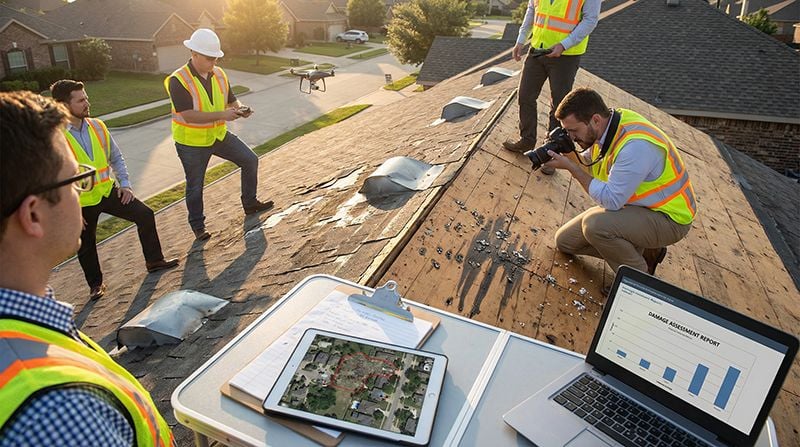
While there are plenty of contractors in the Jacksonville roofing market, CK Select sets itself apart with its educational approach to customer service. Instead of starting off with a sales pitch, their representatives ask assessment questions to help homeowners understand their unique situation. This consultative approach creates a different relationship from the usual contractor dynamic, making CK Select more of a roofing advisor than just a service provider.
As part of my research, I had a chat with a number of Central Florida homeowners who had hired CK Select for jobs that ranged from small repairs to complete replacements. One thing was clear from these discussions: transparency throughout the process. An Orlando homeowner shared his experience with me: “They actually discouraged me from getting a full replacement and showed me how a partial repair could add several years to my roof’s life. That kind of honesty saved me thousands of dollars.” It seems that this approach is a key part of their expansion strategy in Jacksonville—building trust through education rather than pressure tactics.
Insurance Approval Success Rate of 95% on First Visits
CK Select’s proven track record of successful first-visit approvals is a significant benefit for Jacksonville homeowners dealing with insurance claims. Their method involves a combination of thorough documentation and a profound knowledge of the evaluation criteria used by insurance adjusters. This expertise is especially useful given the increasingly strict requirements of Florida insurance companies when it comes to roof damage claims. The company uses specialized software to document damage in ways that exactly match the standards of the insurance industry, making the approval process much easier for homeowners.
CK Select Roofing stands out from other contractors because of their dedication to their clients during insurance claim handling. They make it a point to be present during adjuster inspections, which is not a common practice among many contractors who often just submit the necessary paperwork and leave the homeowners to deal with the adjuster visit by themselves. By personally attending these important inspections, CK Select Roofing can ensure that all damages are properly identified and documented. This kind of support has greatly helped them maintain a high approval rate and is a big help for Jacksonville homeowners who are not familiar with how to process claims.
Advantages of CertainTeed ShingleMaster™ Certification
CK Select, a CertainTeed ShingleMaster™ certified contractor, gives Jacksonville homeowners the opportunity to access top-of-the-line materials with improved warranty choices. This certification is more than just a marketing gimmick—it’s proof of the company’s commitment to training and quality, which directly benefits its customers. The certification allows the company to offer CertainTeed’s extended SureStart™ warranty coverage, which provides much longer protection against manufacturing defects than standard installations. In Jacksonville’s harsh weather conditions, this extra protection can be a significant long-term benefit.
The certification not only provides warranty benefits but also shows the company’s dedication to continuous learning and excellence in installation. The certification process of CertainTeed necessitates frequent training updates as techniques and materials progress, making sure that the teams of CK Select stay updated with the best practices in the industry. This emphasis on ongoing education directly translates to the quality of installation, which eventually determines how well a roof will perform in the challenging weather conditions of Jacksonville.
Guaranteed On-Site Supervision
Many homeowners have had bad experiences with roofing projects because of poor communication and lack of oversight during the work. CK Select tackles this problem head-on with their on-site supervision guarantee, which means that a knowledgeable supervisor is always on hand during the installation. This allows for quality control in real-time and gives homeowners a go-to person for any questions or issues that come up during the project. For Jacksonville professionals who can’t afford to take time off work to oversee contractors, this supervised approach is a real stress-reliever.
Financing Options Without the Stress
CK Select understands that replacing a roof can be a financial burden. That’s why they’ve partnered with several financing providers to offer Jacksonville homeowners a variety of payment options. These options include no-interest plans for those who qualify and extended payment terms to make monthly payments more affordable. What sets their financing options apart is their clear explanation of terms without the high-pressure sales tactics often seen with contractor financing programs.
Their finance experts take the time to explain the benefits of different payment methods, including how some options may impact insurance claims or potential tax benefits. This consultative approach to financing is a reflection of the company’s overall philosophy of educating before recommending, allowing homeowners to make truly informed decisions about their investment.
Services Now Available to Jacksonville Residents
CK Select is now expanding to the Jacksonville market and bringing their full suite of services to homeowners on the First Coast. They provide a comprehensive range of services, from emergency repairs to complete system replacements. They also have a specialized knowledge of the unique challenges that Florida’s roofs face. I was especially impressed by their attention to Florida-specific details, such as enhanced hurricane strapping and secondary water barriers. These are features that many standard installations overlook, but they are crucial for protecting the home during severe weather events. For more information, you can visit CK Select Roofing.
CK Select Roofing’s business model is based on the idea of prevention rather than cure, which is a perfect fit for Jacksonville homeowners. By identifying potential problems before they cause any real damage, they can save homeowners a lot of money. This is especially important in Northeast Florida, where the weather can cause minor roofing problems to become major ones in no time at all. In an area where roofs often fail due to the weather, this systematic approach offers a much-needed alternative to the constant cycle of emergency repairs that many homeowners are all too familiar with.
All-Inclusive Roof Replacement Services
CK Select offers a unique level of accuracy when it comes to total roof replacements in Jacksonville. Their replacement procedure starts with a detailed consultation where they evaluate not just the surface of the roof but the entire roofing system, including the decking, ventilation, and structural elements. This comprehensive method guarantees that new installations tackle any hidden problems that could affect performance. This level of detail is especially beneficial for homes in Jacksonville, where the heat and humidity often lead to deck deterioration. For more insights on maintaining your roof’s integrity, check out this guide on critical roof inspections.
I was particularly impressed by their replacement process and the level of detail they put into selecting materials. Instead of just using standard products, they take the time to assess each property’s unique exposure conditions, architectural style, and the homeowner’s own preferences when it comes to longevity versus upfront cost. This personalized approach results in installations that are tailored to each home’s specific conditions, rather than generic solutions that might not hold up well in Jacksonville’s challenging climate.
Storm Damage Restoration
Given Jacksonville’s susceptibility to tropical storms, storm damage restoration is an especially important service for local homeowners. CK Select’s storm damage restoration process combines immediate response with detailed documentation to make the insurance recovery process easier. Their emergency teams can provide temporary protective measures within hours of damage, preventing the additional damage that often happens after a roof is breached during a storm. For more information on handling insurance claims after storm damage, you can read about roof insurance claims from a Deltona expert.
CK Select Roofing’s storm restoration process involves taking detailed photographs before starting any repairs, providing a clear record for insurance claims. This meticulous approach ensures that all storm-related damage is correctly attributed and included in claims, resolving a frequent problem where insurance companies sometimes attribute damage to pre-existing conditions rather than recent storm events. For Jacksonville homeowners dealing with the aftermath of severe weather, this mix of quick response and documentation expertise can make a big difference in recovery results.
Professional Roof Inspection and Upkeep
CK Select’s most beneficial service to Jacksonville homeowners might not be the most exciting—it’s their thorough inspection and preventative maintenance. Their multi-point inspection system catches problems in the early stages before they turn into expensive fixes. These inspections don’t just look at the condition of the shingles but also the integrity of the flashing, the performance of the ventilation, and the alignment of the structure—factors that greatly contribute to the lifespan of the system but are often missed in quick evaluations.
CK Select Roofing has created maintenance programs that are specifically designed for the climate in Florida. They focus on addressing the issues that most often lead to premature failures in our area: biological growth, wind-lifted materials, and water infiltration around penetrations. By identifying and correcting these issues early, these maintenance programs can significantly extend the life expectancy of a roof—often adding years of service before replacement becomes necessary. For homeowners in Jacksonville who want to get the most out of their investment, this proactive approach represents substantial long-term value. Learn more about why hurricane ties are essential for homes in Florida.
Commercial Roofing for Jacksonville Businesses
Although we have mostly discussed residential services, we should note that CK Select also has a commercial division for business owners in Jacksonville. This division specializes in low-slope and flat roof systems, which are common on commercial buildings in Jacksonville. They offer solutions that reduce business disruption during installation. They also offer specialized options for Florida’s climate challenges. For example, they offer reflective coatings that reduce cooling costs. This is a significant consideration for businesses in Jacksonville who are trying to manage their energy expenses.
Their commercial approach is unique because they focus on lifecycle cost rather than just the initial installation cost. They analyze aspects like energy efficiency, maintenance requirements, and expected lifespan to help business owners understand the true cost of different roofing options over time. This consultative approach has been especially beneficial for Jacksonville property managers who have to maintain multiple commercial properties in Florida’s tough weather conditions.
Getting Started with CK Select Roofing
CK Select has made it easy for Jacksonville homeowners to get started with their services. They have a straightforward process that minimizes hassle and maximizes information. They also have local teams in Jacksonville who are familiar with the city’s specific building codes, neighborhood characteristics, and common roofing challenges. This allows them to provide recommendations that are relevant to each property’s specific circumstances. For more information, you can visit the CK Select Roofing website.
Complimentary, No-Pressure Roof Inspections
CK Select offers a free inspection service that gives Jacksonville homeowners a detailed assessment without any sales pressure or strings attached. Unlike many “free inspections” that are really just sales pitches in disguise, their process starts with thorough documentation and homeowner education. Their inspectors follow a standardized protocol that checks all parts of the roof, documenting the current state of the roof with detailed photos and measurements. This meticulous process gives homeowners much more valuable information than the quick once-overs that many companies call “inspections.”
The real value in these inspections comes from the detailed explanation that follows. Instead of just listing problems and pressuring homeowners to make immediate decisions, their reps take the time to explain their findings in plain English, helping homeowners understand the true condition of their roof. For those who have never experienced this level of transparency, it’s a refreshing change from the high-pressure tactics that have unfortunately become all too common in the industry.
A Straightforward Three-Step Approach
For homeowners who decide to proceed with repairs or replacement, CK Select has simplified their process into three easy-to-follow stages: consultation, proposal, and installation. The consultation stage involves a comprehensive site assessment, a discussion about the homeowner’s needs, and an explanation of the available options. This consultation usually lasts between 60-90 minutes and lays the groundwork for a tailored solution rather than a one-size-fits-all approach. During this stage, homeowners can expect candid responses about whether repairs may be adequate or if replacement is truly the most economical long-term solution.
CK Select Roofing provides a detailed plan of action during the proposal phase, including material specifications, process details, and transparent pricing. This is a step up from the vague estimates that are common in the industry. The proposal also includes specifics about the preparation work, quality control measures, cleanup protocols, and warranty details. The installation phase then proceeds according to a clearly communicated timeline, with project managers providing regular updates throughout. This structured approach reduces the anxiety and uncertainty that often accompany major home improvement projects, creating a more positive experience for homeowners. For more information, check out their roof preparation guide.
Common Questions About CK Select Roofing in Jacksonville
As CK Select Roofing sets up shop in Jacksonville, we’ve gathered answers to some of the questions Jacksonville homeowners are asking about their services. These answers come from interviews with CK Select Roofing representatives and customer testimonials from their established service areas throughout Central Florida.
What is CK Select’s emergency response time in Jacksonville?
CK Select has emergency response teams on standby for urgent issues like storm damage or active leaks. If you’re a Jacksonville homeowner dealing with an emergency, you can expect them to respond within 4-6 hours during business hours and within 24 hours during evenings and weekends. They’ll first take temporary protective measures to prevent further damage, then carry out full repairs once the weather allows and all insurance paperwork is finished.
What type of roofing materials does CK Select have that will hold up in Florida’s weather?
CK Select has a range of materials that are specifically chosen to withstand Florida’s harsh weather conditions, from architectural asphalt shingles to materials that are resistant to impacts and designed to perform better during hurricanes. They are a CertainTeed ShingleMaster™ certified contractor and offer all CertainTeed products, including the Landmark® series which is specifically made for areas with high winds, like Jacksonville.
Not only do they offer the classic shingle option, but they also have metal roofing options that are becoming more and more popular due to their long-lasting nature and ability to withstand severe weather conditions. For the flat or low-slope sections that are common in many Jacksonville homes, they offer modern modified bitumen and single-ply membrane systems that provide better waterproofing than the older built-up roofing methods. Each recommendation is made specifically for the exposure conditions, architectural requirements, and budget considerations of each individual property. For more insights on how roof types perform in severe weather, check out this guide.
CK Select’s Procedure for Insurance Claims
How does CK Select manage insurance claims for homeowners in Jacksonville? For those preparing for the upcoming hurricane season, CK Select offers guidance on roof preparation which can be crucial for insurance claims.
1. Thorough documentation of all damage using formats standard to the insurance industry is crucial when filing a claim. For more insights on this process, consider reading this expert explanation on roof insurance claims.
2. Detailed estimate preparation in accordance with insurance pricing guidelines
3. Coordinating directly with adjusters, including attending on-site meetings
4. Filing additional claims for damage found during repair work
5. Help with appeals if claims are initially denied or underpaid. For more information on navigating these challenges, consider reading this Deltona expert’s explanation on roof insurance claims.
CK Select Roofing takes an extra step when it comes to insurance claims. Instead of just taking a few pictures, they go above and beyond to make sure their documentation meets or even exceeds what the insurance company needs. They train their inspectors to follow insurance documentation protocols, so they can record damage in a way that matches what adjusters are looking for. This extra effort pays off. It helps homeowners get their claims approved and increases the amount they can get for their claim. This is a big improvement over the often incomplete documentation homeowners or less experienced contractors might provide.
What makes them stand out in the way they handle insurance is their dedication to direct coordination with adjusters. Unlike many contractors who leave homeowners to deal with adjuster interactions on their own, CK Select representatives make it a point to personally attend adjuster inspections to make sure all damages are properly identified and recorded. This kind of advocacy can significantly affect the results of claims, especially for damages that are not immediately noticeable and might be missed otherwise.
In particularly challenging claims, the company has connections with public adjusters who can provide additional expertise if necessary. However, their internal insurance knowledge can resolve most claims without needing this additional step, saving homeowners both time and the cost of public adjuster fees in straightforward situations. For more insights, read this expert explanation on roof insurance claims.
What kind of warranties does CK Select Roofing offer with their installations?
CK Select Roofing offers warranties that go above and beyond the industry standard. Their installations come with a manufacturer’s warranty that covers the materials, which typically lasts between 30 and 50 years depending on the product. They also offer their own workmanship warranty that covers the quality of the installation. Because they are a CertainTeed ShingleMaster™ certified contractor, they can also offer CertainTeed’s enhanced SureStart™ warranty options. These offer non-prorated coverage for the most comprehensive protection. This warranty structure is especially beneficial for homeowners in Jacksonville, given Florida’s harsh weather conditions and the importance of proper installation in ensuring long-term performance.
Does CK Select Roofing have the necessary licensing and insurance to operate in Jacksonville?
Indeed, CK Select has all the licenses necessary to operate in Duval County and surrounding areas, including certification as a roofing contractor by the state of Florida. Their insurance coverage goes beyond the minimum requirements, providing comprehensive general liability coverage and workers’ compensation protection. This full compliance protects Jacksonville homeowners from potential liability issues that can occur when working with contractors who are not sufficiently insured. To learn more about local roofing programs, check out the City of Jacksonville’s roofing repair program.
They encourage customers to check their qualifications and will happily provide proof of their insurance and licensing. This openness is a testament to their commitment to building trust with customers and offers reassurance to homeowners about to invest in a new roof.
CK Select’s expansion into Jacksonville is a game changer for homeowners who need a new roof. They are known for their technical expertise and commitment to customer service. They specialize in insurance claims and are dedicated to quality work. Whether you need a new roof because of storm damage or because your roof is getting old, they can help. They provide valuable information and don’t pressure you to make a decision. For a FREE quote https://ckselectroofing.com/free-quote/
Do I Need A Contractor For A Roof Insurance Claims: Deltona Expert Explains
Key Takeaways
- Hiring a contractor for your roof insurance claim in Deltona increases approval chances by up to 70% through professional documentation and damage assessment
- Insurance adjusters often miss hidden roof damage that experienced contractors can identify and document properly
- Florida’s specific roofing regulations and recent insurance law changes require specialized knowledge that most homeowners don’t possess
- While DIY claims may work for minor damage, severe weather events common in Deltona typically require professional assistance
- Local contractors understand Deltona’s unique weather patterns and how they affect insurance claims in ways out-of-area adjusters might miss
Why Most Deltona Homeowners Need Professional Help With Roof Claims
After a severe storm rolls through Deltona, that damaged roof over your head suddenly becomes your biggest priority. Filing an insurance claim might seem straightforward – take some photos, call your insurer, and wait for a check. That approach works fine for minor issues, but when it comes to significant roof damage, going it alone often leads to undervalued claims or outright denials. According to industry data, homeowners who work with qualified roofing contractors on their claims receive on average 30% more in their settlements compared to those who handle claims themselves.
The reality is that roof damage assessment requires specialized knowledge that most homeowners simply don’t have. When I inspect roofs in Deltona after storms, I frequently find significant damage that homeowners completely missed – cracked underlayment, lifted shingles that haven’t blown off yet, and damage to roof components that aren’t visible from the ground. Insurance adjusters, who might spend just 20-30 minutes on your roof, often miss these issues too, especially when they’re handling dozens of claims after a major weather event.
Deltona’s location in Florida creates additional complexities for roof claims. Our unique weather patterns – from hurricane-force winds to intense UV exposure and heavy seasonal rains – create damage patterns that differ from those in other regions. Local contractors who work exclusively in this area understand these patterns and can properly document them in ways that satisfy insurance requirements. This local knowledge becomes particularly valuable when dealing with adjusters who may be brought in from other states after major storms and lack familiarity with Florida’s specific roofing issues and construction codes.
How Insurance Companies Evaluate Roof Damage Claims
Insurance companies approach roof claims with a systematic process designed to minimize their costs while meeting their contractual obligations. Understanding this process is crucial for successful claims. When you file a claim, the insurance company’s primary goal isn’t to fully restore your roof – it’s to settle the claim as efficiently and economically as possible while adhering to the specific terms of your policy. For homeowners in hurricane-prone areas, it’s important to be aware of roof preparation strategies to ensure claims are processed smoothly.
Most homeowners are surprised to learn that insurance companies regularly deny legitimate claims based on technicalities or assessments that don’t capture the full extent of the damage. A recent industry study found that approximately 30% of initial roof damage claims are denied, with many eventually approved after professional contractor involvement. This isn’t necessarily because insurance companies are dishonest, but because their adjusters follow specific protocols that often don’t account for the complexities of roof damage.
The Insurance Adjuster’s Assessment Process
When an adjuster arrives at your Deltona home, they’re working from a standardized playbook. They’ll typically spend 20-45 minutes examining your roof, taking photographs, and making notes according to their company’s specific criteria. During this brief assessment, they’re looking for obvious signs of damage that clearly fall within your policy’s coverage terms. What they’re not doing is conducting a comprehensive roof inspection – they don’t remove shingles to check the decking, they rarely inspect the attic for water intrusion, and they’re not testing the integrity of flashing and other critical components. For a more detailed examination, consider scheduling critical roof inspections to ensure your roof’s resilience.
The adjuster will classify damage into categories like wind damage, hail damage, or wear and tear – with only certain categories qualifying for coverage under most policies. In Deltona, where we experience complex weather events like hurricanes that create combined wind and water damage, this categorization process often works against homeowners. An experienced contractor knows how to properly document damage in ways that clearly demonstrate covered perils caused the damage, not excluded conditions like normal wear and tear.
Common Reasons Roof Claims Get Denied
Insurance companies cite several common reasons for denying roof claims in the Deltona area. Age-related deterioration tops the list, with insurers often arguing that damage resulted from normal wear rather than a specific covered event. This distinction is critical – and often subjective. Without a contractor’s expert assessment, homeowners frequently lack the evidence needed to challenge these determinations.
Maintenance issues represent another major denial category. If an adjuster identifies what they consider pre-existing damage or maintenance failures, they’ll likely deny coverage for related damage even if a storm was the primary cause. For example, if your roof had minor unrepaired damage before a hurricane caused major damage, the insurer might deny the entire claim based on failure to maintain the property. A qualified contractor can help separate pre-existing conditions from new damage with proper documentation.
Perhaps most frustrating are denials based on improper documentation or missed filing deadlines. The claims process involves strict timelines and specific documentation requirements that vary by insurance company. Without professional guidance, homeowners often make innocent mistakes that give insurers legal grounds to deny otherwise valid claims.
What Your Policy Actually Covers vs. What You Think It Covers
The gap between what homeowners believe their insurance covers and what policies actually cover creates significant frustration during the claims process. Most Deltona homeowners I work with are stunned to discover their policy doesn’t automatically cover full roof replacement after a hurricane or that certain types of water damage aren’t covered without supplemental policies. The technical language in insurance policies deliberately creates ambiguity that typically benefits the insurer, not the policyholder.
5 Critical Ways Contractors Help With Insurance Claims
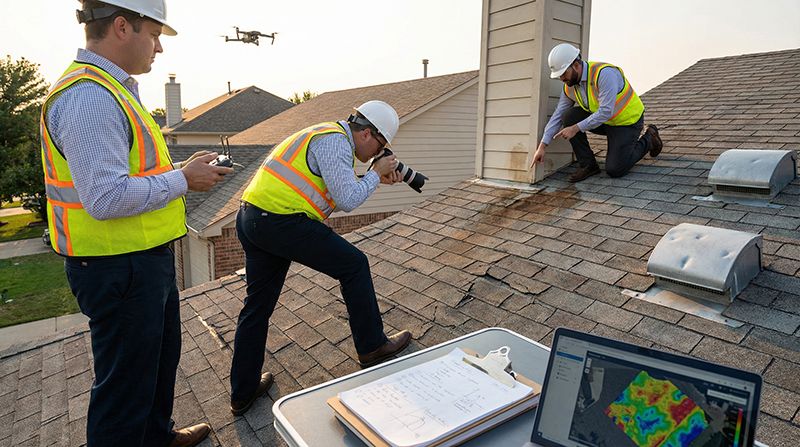
When it comes to navigating the complex process of roof insurance claims, having a professional contractor in your corner dramatically improves your chances of success. The value of professional assistance becomes even more apparent when dealing with the specific challenges of Deltona’s weather patterns and Florida’s ever-changing insurance regulations. Let me walk you through exactly how contractors make a difference in the claims process.
1. Professional Damage Documentation That Adjusters Respect
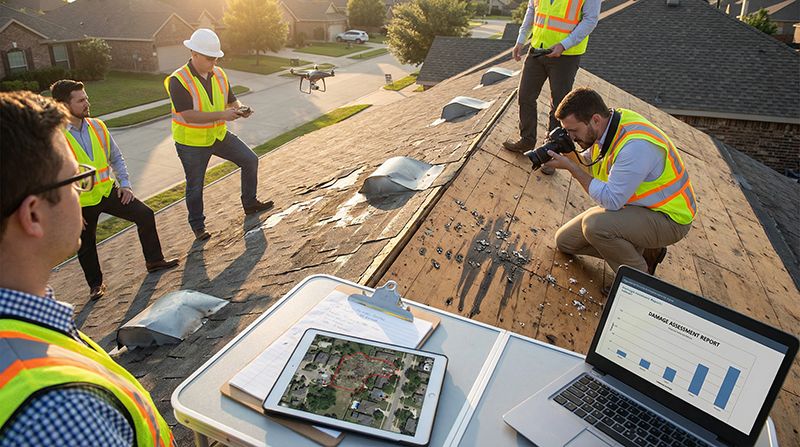
The foundation of any successful roof claim is thorough, credible documentation. When I document roof damage for Deltona homeowners, I’m creating a comprehensive record that insurance companies find difficult to dispute. This includes high-resolution photographs from multiple angles, detailed measurements, and specific notes about damage to each roof component – from shingles and flashing to underlayment and decking.
Professional documentation goes far beyond what most homeowners can produce on their own. We use specialized equipment like moisture meters to detect water infiltration beneath the surface, infrared cameras to identify temperature differences that signal damage not visible to the naked eye, and drone technology for comprehensive aerial documentation. This level of detail creates a compelling case that often results in higher claim approvals and fewer disputes with adjusters.
2. Accurate Repair Cost Estimates
One of the most common pitfalls in DIY roof claims is underestimating the true cost of proper repairs. Insurance companies rely on standardized pricing software that often doesn’t account for Deltona’s specific market conditions, material availability, or the complexity of certain repairs. For a comprehensive understanding of these challenges, you can refer to this guide on critical roof inspections. This leads to settlements that fall short of covering actual repair costs.
Professional contractors provide detailed, itemized estimates based on current local pricing for materials and labor. These estimates include critical components that homeowners often forget – like permits, code compliance upgrades, debris removal, and protection of your property during repairs. Having this comprehensive estimate during the claims process helps ensure your settlement will actually cover the necessary work to properly restore your roof.
When comparing contractor estimates with insurance adjuster estimates, we often find discrepancies of 25-40% in total project costs. This gap represents money that comes directly out of your pocket if your claim isn’t properly documented and negotiated.
3. Technical Expertise to Identify Hidden Damage
Perhaps the most valuable service contractors provide is identifying damage that’s not immediately obvious. After major storms in Deltona, I frequently discover significant hidden damage that homeowners and even some insurance adjusters miss during initial inspections. Wind damage, for instance, might lift shingles without tearing them off – creating water entry points that won’t be visible until leaks develop months later.
Experienced contractors know exactly where to look for these hidden issues based on the specific weather event that affected your home. We understand that hurricane-force winds create different damage patterns than typical thunderstorms, and we know which roof components are most vulnerable to each type of weather event. This expertise ensures that all damage – not just the obvious problems – is documented and included in your claim.
Additionally, contractors can identify secondary damage that might qualify for coverage. For example, if wind damages your roof and allows water infiltration into your attic, the resulting damage to insulation and ceiling materials should be included in your claim. Without professional assessment, these secondary issues often go undocumented and unclaimed.
4. Insurance Language Translation and Negotiation
Insurance policies are written in highly technical language that creates significant advantages for insurance companies when dealing with homeowners who don’t understand industry terminology. Professional contractors function as translators, helping you understand what your policy actually covers and how to properly describe damage in terms that align with coverage provisions.
Beyond translation, experienced contractors know how to effectively negotiate with adjusters. We understand insurance companies’ standard objections and have developed effective counters based on industry standards and building codes. This negotiation expertise often makes the difference between a denied claim and an approved one, or between a partial settlement and full coverage for necessary repairs.
The most significant benefit comes when contractors can meet with adjusters during their inspection. This face-to-face interaction allows for real-time discussion of findings, immediate clarification of technical details, and often on-the-spot resolution of potential disputes. In my experience, claims where I’ve met with the adjuster have a significantly higher approval rate than those where homeowners meet with adjusters alone.
5. Compliance With Florida-Specific Roofing Regulations
Florida’s building codes and insurance regulations are among the most complex in the nation, especially for roofing. These regulations change frequently, with major updates after significant storm events. Most Deltona homeowners aren’t aware of these technical requirements, but insurance companies certainly are – and they use homeowners’ lack of knowledge to deny claims based on compliance issues.
Professional roofing contractors stay current with these regulations as part of their business. We ensure that all documentation and repair plans comply with current Florida building code requirements, including wind mitigation standards, material specifications, and installation methods. This compliance knowledge prevents claim denials based on technical regulatory issues that homeowners wouldn’t know to address.
- Florida Building Code requirements for roof systems in high-velocity hurricane zones
- Updated wind mitigation standards that affect repair specifications
- Documentation requirements specific to Florida insurance claims
- Recent legislative changes affecting how claims must be filed and processed
- Local Deltona code enforcement requirements that may exceed state minimums
Beyond just knowing these regulations, professional contractors maintain relationships with local building officials and stay informed about how these rules are being interpreted and enforced in Deltona specifically. This local regulatory knowledge provides another layer of protection for your claim that out-of-area adjusters or homeowners handling their own claims simply can’t match. For more information on how hip roofs perform better in Florida hurricane winds, consider exploring expert insights.
DIY Claim Filing: When It Might Work
While I generally recommend professional assistance for roof claims, there are specific scenarios where handling a claim yourself might be appropriate. Understanding when DIY claims make sense can save you time and potentially contractor fees for very straightforward situations. For those preparing for hurricane season, it’s crucial to conduct critical roof inspections to ensure your roof is in top condition.
Minor Damage Scenarios Where DIY Claims Make Sense
For truly minor damage that’s limited in scope and clearly visible, DIY claims can be effective. Examples include a small number of shingles blown off during a thunderstorm, minor damage from a fallen branch that affected a single, accessible area of your roof, or damage to roof accessories like a single vent or small section of gutter. These limited damage scenarios typically involve straightforward repairs with easily estimated costs. For more comprehensive preparation, consider reviewing our roof preparation guide.
The key factors that make DIY claims viable are visibility and simplicity. If you can safely photograph all the damage from the ground or with a simple ladder setup, and if the cause of damage is obvious and clearly covered by your policy, you might successfully handle the claim yourself. This approach works best when you’ve had a good relationship with your insurance company and have a clear understanding of your coverage terms.
- A few missing shingles after a windstorm (less than 10-15 total)
- Damage limited to a small, accessible area of the roof
- Simple repairs that don’t require assessment of underlying structures
- Damage from a single, well-documented event like a fallen tree branch
- Claims where your deductible is close to the expected repair cost
Remember that even with seemingly minor damage, hidden issues may exist. If your DIY claim is approved but you later discover additional related damage during repairs, reopening the claim becomes significantly more difficult. This represents the primary risk of handling even simple claims without professional assistance.
The Contractor-Adjuster Meeting: What to Expect
When your contractor meets with the insurance adjuster at your Deltona property, this critical interaction often determines the outcome of your claim. I recommend being present for this meeting, but let your contractor take the lead in discussing technical aspects. The meeting typically starts with introductions and a walkthrough of damage areas, with both parties taking photographs and notes.
During this inspection, your contractor will point out all identified damage, especially those issues the adjuster might overlook. Expect some back-and-forth discussion about cause of damage, repair requirements, and necessary materials. Good contractors maintain a professional relationship with adjusters while firmly advocating for proper repairs. Remember that adjusters appreciate working with knowledgeable professionals who can speak their language rather than emotional homeowners.
After the physical inspection, the parties will usually discuss next steps and timelines. Your contractor should take detailed notes about what the adjuster acknowledged and any disagreements that emerged. This documentation becomes crucial if disputes arise later in the claims process. Within 24-48 hours of this meeting, ask your contractor for a full briefing on how the meeting went and what to expect next from your insurance company.
What To Bring To The Contractor-Adjuster Meeting
• Copy of your insurance policy
• Previous inspection reports or roof maintenance records
• Photos taken immediately after the damage occurred
• Written timeline of events (storm date, when damage was discovered, etc.)
• List of any temporary repairs already completed
• Questions you want answered during the inspection
Red Flags: When a Contractor Might Be Hurting Your Claim
While most roofing contractors in Deltona are honest professionals, some practices can seriously damage your insurance claim and potentially leave you in a worse position. Recognizing these warning signs early can save you significant headaches and financial losses. Be particularly cautious of contractors who appear immediately after storms, offer to pay your deductible (which is illegal in Florida), or pressure you to sign documents before your insurance company has been contacted. For more on how to protect your home during storm season, check out this complete roof preparation guide.
Warning Signs of Dishonest Contractors
The most dangerous contractors are those who make promises that sound too good to be true – because they typically are. Be immediately suspicious of anyone guaranteeing they can get your insurance to pay for a new roof regardless of actual damage or claiming special relationships with insurance companies that will ensure approval. These claims often indicate contractors who engage in fraudulent practices that could invalidate your insurance coverage entirely.
Immediate Red Flags in Contractor Behavior
• Offering to pay or “absorb” your deductible
• Pressuring you to sign an Assignment of Benefits (AOB) immediately
• Providing dramatically different damage assessments than other contractors
• Suggesting they can “find” damage that isn’t visible
• Refusing to provide local references or proof of insurance
• Demanding large upfront payments before insurance approval
Pay careful attention to any contractor who suggests artificially inflating damage or making your roof “look worse” before the adjuster arrives. These unethical practices constitute insurance fraud, which is aggressively prosecuted in Florida. Not only could this lead to claim denial, but you could potentially face legal consequences and policy cancellation that makes future coverage difficult to obtain.
Also be wary of contractors who pressure you to sign an Assignment of Benefits form immediately. While AOBs can be legitimate tools, they effectively sign over your insurance rights to the contractor, giving them control over your claim. Dishonest contractors may use AOBs to inflate claims, perform unnecessary work, or even collect insurance payments without completing repairs properly. Recent Florida law changes have placed more restrictions on AOBs, but they remain potentially problematic if misused.
Look for contractors who spend minimal time on your roof during assessment or who produce generic, template-style documentation rather than specific details about your property. Quality contractors thoroughly document each unique situation with property-specific details, measurements, and photographs. Generic documentation suggests the contractor isn’t investing the proper effort to accurately assess your specific damage, which will likely result in problems during the claims process.
Florida’s New Laws on Contractor Conduct for Insurance Claims
Florida has implemented significant legislative changes in recent years specifically targeting roof insurance claims. These laws restrict how contractors can advertise, interact with homeowners regarding insurance, and handle the claims process. For example, contractors can no longer offer incentives to homeowners for allowing them to inspect roofs for damage, and there are strict regulations about how they can discuss potential insurance coverage for repairs. Most importantly, contractors cannot file claims on homeowners’ behalf or directly communicate with insurance companies without specific legal authorization.
Always verify that your contractor is following these updated regulations. Reputable Deltona contractors stay current with these laws and operate transparently within their guidelines. If a contractor suggests practices that seem to circumvent these regulations – like having you sign blank forms or documents with “estimated” damage amounts – consider this a serious warning sign and seek a different professional for your claim.
Make the Right Choice for Your Deltona Roof
Navigating roof insurance claims doesn’t have to be overwhelming when you partner with the right professional. An experienced, ethical contractor provides the technical expertise, documentation skills, and advocacy needed to maximize your claim while ensuring your roof receives proper repairs that will protect your Deltona home for years to come. By understanding the insurance process, recognizing the value professional contractors bring to claims, and knowing how to identify reliable professionals, you’re well-equipped to make decisions that protect both your home and financial interests. For complex damage or significant claims, the investment in professional assistance typically pays for itself many times over through increased claim settlements and properly executed repairs.
Frequently Asked Questions
Here are answers to some of the most common questions Deltona homeowners have about working with contractors on roof insurance claims. These responses reflect the current insurance landscape in Florida and specifically address concerns relevant to our local Deltona conditions.
Remember that while these answers provide general guidance, each insurance policy has unique terms and conditions. Always review your specific policy and consult with qualified professionals about your particular situation.
How much does it cost to hire a contractor for my insurance claim?
Most reputable roofing contractors in Deltona don’t charge for initial inspections or for help with standard insurance claim documentation. Their compensation comes from performing the actual repair work if your claim is approved. Be cautious of contractors who charge upfront fees specifically for claim assistance, as this may indicate they’re more interested in consulting fees than actual roofing work. However, if your claim situation becomes complex or involves disputes with your insurance company, some contractors may recommend independent public adjusters who do charge a percentage of the claim settlement (typically 10-20%) for their specialized services.
Can my insurance company force me to use their preferred contractor in Florida?
No, Florida law protects your right to choose your own contractor for repairs. While insurance companies can and do recommend their “preferred vendors,” you are not obligated to use them. Your policy likely states that repairs must be completed by “qualified” or “licensed” contractors, but this doesn’t restrict you to the insurer’s network. Be aware that some insurance companies may imply that using their contractors ensures coverage or speeds up the process, but standing firm on your right to choose is legally protected.
What documentation should my roofing contractor provide for the insurance claim?
At minimum, your contractor should provide a detailed damage assessment report with specific locations and types of damage, comprehensive photographs documenting all damaged areas, an itemized estimate breaking down materials and labor costs, and a written professional opinion regarding cause of damage. This documentation should clearly connect the damage to covered perils in your policy. For more information on preparing for extreme weather, check out this guide on critical roof inspections before hurricane season.
Additionally, quality contractors will provide copies of their license, insurance certificates, local references, and a detailed scope of work that specifies exactly what repairs will be performed. These documents not only support your insurance claim but also protect you by clearly establishing expectations for the repair work.
How long do roof insurance claims typically take in Deltona?
In normal conditions, Deltona roof claims typically take 2-6 weeks from filing to settlement. However, after major storms or hurricanes, this timeline can extend to 2-3 months due to the high volume of claims. Florida insurance regulations require companies to acknowledge claims within 14 days and make a determination within 90 days, but these deadlines are often stretched during disaster situations. Working with an experienced contractor who provides thorough documentation upfront can help expedite the process by reducing the need for additional inspections or information requests from your insurance company.
Can I switch contractors after filing a claim if I’m not satisfied?
Yes, you can change contractors at any point before work begins, even if you’ve already filed a claim using documentation from your original contractor. Your insurance settlement is paid to you (unless you’ve signed an Assignment of Benefits), not to the contractor, so you maintain the right to choose who performs the work. If you’ve signed a contract with your original roofer, review the cancellation terms carefully – most have provisions for cancellation within 3-5 days of signing, but may include cancellation fees after that period.
If you switch contractors after your claim has been approved, have your new contractor review the insurance company’s scope of work and payment to ensure it adequately covers all necessary repairs. If the new contractor identifies additional issues or discrepancies, they can help you file a supplemental claim for any items not included in the original settlement.
Hurricane Season 2025: Complete Central Florida Roof Preparation Guide
Article-At-A-Glance
- Hurricane-proofing your roof before storm season can prevent catastrophic damage and potentially save you thousands in repair costs.
- Critical inspection points include examining shingles, flashing, previous water damage, and roof-to-wall connections that often fail first in high winds.
- Installing hurricane straps can increase wind resistance by up to 40%, making them one of the most cost-effective protection measures for Central Florida homes.
- Proper tree maintenance around your property is essential, as falling branches cause approximately 30% of roof damage during hurricanes.
- RoofCrafters has been helping Central Florida homeowners prepare for hurricane seasons since 1994 with specialized storm-resistant roofing solutions.
The Atlantic hurricane season is approaching fast, and Central Florida homeowners have a narrow window to prepare. Your roof stands as the critical barrier between your family and the devastating forces of nature. With forecasters predicting an above-average 2025 hurricane season, now is the time to ensure your roof can withstand what’s coming.
Your Roof Is Your First Line of Defense Against Hurricanes
When hurricane-force winds hit your home, the roof typically experiences the most stress. In fact, once a roof fails during a storm, the chance of catastrophic home damage increases by over 70%. Most Central Florida homes experience significant pressure changes when high winds flow over the roof surface, creating a lifting effect that can separate shingles, tiles, or even entire roof sections from the structure. RoofCrafters specialists have witnessed firsthand how properly secured roofing systems can mean the difference between minor repairs and complete home loss.
The good news is that modern roofing technologies and preparation techniques have dramatically improved our ability to protect homes. Studies following Hurricane Irma showed that homes with updated roof protection measures were three times less likely to suffer major damage. These improvements don’t always require complete roof replacement—strategic upgrades and proper maintenance can significantly enhance your existing roof’s hurricane resistance.
The time to act is before the weather alerts begin. Most professional roofers become booked solid 4-6 weeks before hurricane season officially begins on June 1st. Waiting until a storm is approaching means facing limited contractor availability, potential material shortages, and rushed work that might not hold up when you need it most.
8 Critical Roof Inspection Points Before Hurricane Season
A thorough roof inspection is your starting point for hurricane preparation. This assessment reveals vulnerabilities that could compromise your entire home during severe weather. While some homeowners attempt DIY inspections, having a professional evaluate your roof provides a comprehensive understanding of potential weak points that untrained eyes might miss.
Did You Know? According to Florida’s Division of Emergency Management, homes with professional pre-season roof inspections are 60% less likely to sustain major hurricane damage compared to uninspected homes. The average inspection costs $200-$350 but can save thousands in preventable damage.
Check for Missing or Damaged Shingles
Missing, curled, or cracked shingles create entry points for wind and water. Even a single damaged shingle can allow water to penetrate during heavy rain, leading to interior damage and potential mold issues. During inspection, pay special attention to the edges and corners of your roof, as these areas experience the highest wind pressure during hurricanes. Loose granules in gutters or at downspout exits indicate shingle deterioration that may not be obvious from ground level.
For tile roofs common in Central Florida, check for cracked, broken, or displaced tiles that compromise the water-shedding ability of your roof. Remember that tile roofs have specific vulnerability points where high winds can get underneath individual tiles and create a domino effect of failure.
Examine Flashing Around Roof Penetrations
Flashing creates critical weatherproof seals around chimneys, vents, skylights, and roof valleys. During hurricanes, these transition points often fail first, allowing water intrusion even when the main roof surface remains intact. Look for signs of rust, gaps, or separated metal pieces that indicate compromised flashing integrity. Proper flashing installation should include both a primary water barrier and secondary water-shedding components.
In Central Florida’s climate, flashing deterioration accelerates due to intense UV exposure and frequent thermal expansion cycles. If your flashing is over 10 years old, consider replacing it preemptively even if it appears functional under normal conditions.
Pay particular attention to chimney and skylight flashing, as these larger penetrations create more significant wind disruption patterns during storms, increasing the stress on surrounding materials. Modern high-performance flashing systems use flexible membranes that better accommodate building movement during high winds.
Look for Signs of Previous Water Damage
Water stains on ceilings or interior walls often reveal hidden roof leaks that worsen during heavy rain. From your attic, check for discolored wood, mold growth, or dampness that indicates active leaks or previous water intrusion. These symptoms typically appear before more obvious interior damage becomes visible and addressing them early prevents significant structural deterioration.
- Yellow or brown stains on ceilings or walls
- Sagging or bubbling drywall
- Musty odors in upper rooms or attic spaces
- Visible mold or mildew growth
- Damp insulation in attic areas
Inspect Gutters and Downspouts
Clean, properly secured gutters channel water away from your roof and foundation. During hurricanes, clogged gutters become heavy with water and debris, potentially tearing away from the home and creating additional wind-catch hazards. Ensure your gutter system is firmly attached with screws (not nails), pitched properly toward downspouts, and free from plant growth or debris accumulation. Consider installing gutter guards to minimize debris collection between maintenance visits. For more tips, explore our hurricane-proof your roof guide.
Test Attic Ventilation
Proper ventilation balances temperature and pressure during storms, reducing the risk of roof deck uplift. Inspect soffit vents, ridge vents, and gable vents for blockages from insulation, debris, or pest intrusions. In hurricane conditions, inadequate ventilation can create internal pressure that literally pushes your roof upward when combined with external wind uplift forces, potentially causing catastrophic failure.
Many Central Florida homes built before 2002 have insufficient ventilation by modern standards. Consider upgrading to hurricane-rated ventilation systems that include specialized baffles or screens that allow airflow while preventing wind-driven rain intrusion. These systems typically cost $500-$1,200 to install but significantly improve both storm resistance and everyday energy efficiency.
Evaluate Roof-to-Wall Connections
The connection points between your roof and walls are critical failure points during high winds. From inside your attic, inspect trusses or rafters where they meet exterior walls, looking for hurricane straps, clips, or other reinforcement hardware. Many older Florida homes lack these crucial connectors, making them vulnerable to roof separation during strong storms.
Modern building codes require mechanical connections between roof structures and wall frames, but homes built before 2002 may have simple toenailed connections that provide minimal wind resistance. If your home lacks proper hurricane hardware, this should be your highest-priority upgrade before the next storm season.
Assess Roof Age and Material Condition
Roof age significantly impacts hurricane performance, with materials losing resilience as they weather. Most asphalt shingle roofs in Florida last 15-20 years at maximum, while tile roofs might survive 25-30 years with proper maintenance. If your roof is approaching these age thresholds, consider that even intact-looking materials may have diminished wind resistance.
Beyond age, material degradation appears in different forms: brittleness in asphalt shingles, cracking in concrete tiles, or fastener corrosion in metal panels. A professional inspection can assess whether your roofing has reached a point where hurricane protection is compromised regardless of its appearance from ground level.
Document Current Roof Condition with Photos
Comprehensive photo documentation serves dual purposes: establishing a baseline for future damage assessment and providing crucial evidence for insurance claims if needed. Take clear, date-stamped photos of your entire roof system, including close-ups of potential problem areas and wide shots showing overall condition. For more tips on protecting your roof, check out our guide on hurricane-proofing your roof.
Store these images both digitally (cloud storage) and physically (printed copies in waterproof containers) to ensure accessibility after a storm. Include detailed notes about recent maintenance, repairs, or upgrades with corresponding receipts. This documentation often makes the difference between approved and denied insurance claims following hurricane damage.
Strengthen Your Roof Against 150+ MPH Winds
Beyond inspection, strategic upgrades dramatically improve your roof’s hurricane resistance. These reinforcements target the specific failure points identified in post-hurricane engineering studies. While some improvements require significant investment, others can be accomplished affordably during routine maintenance or repairs.
Hurricane Straps and Clips Installation
Hurricane straps create continuous load paths from roof to foundation, preventing roof separation during extreme wind events. These metal connectors secure roof trusses or rafters to wall framing, typically providing 800-1,500 pounds of uplift resistance per connection point. Engineering studies after Hurricane Andrew revealed that homes with proper strapping were three times more likely to maintain roof integrity.
Installing hurricane straps in an existing home requires attic access but can usually be completed without removing roofing materials. For a typical 2,000 square foot home, expect to pay $1,000-$2,500 for professional installation of a complete hurricane strap system. This investment typically qualifies for insurance discounts that recover costs over 3-5 years while providing immediate protection. For more details on how to hurricane-proof your roof, visit our guide.
Secondary Water Barriers for Leak Prevention
Secondary water barriers provide crucial backup protection when primary roofing materials fail during hurricanes. These waterproof underlayments, installed between the roof deck and shingles or tiles, prevent water intrusion even when surface materials are damaged or displaced. Modern options include peel-and-stick membranes that adhere directly to the roof deck, creating a waterproof seal around fastener penetrations.
While secondary barriers are easiest to install during complete re-roofing, partial installation in high-vulnerability areas (eaves, valleys, around penetrations) can be accomplished during repairs. When selecting materials, look specifically for Miami-Dade approved products designed for hurricane conditions rather than standard underlayments.
Roof Deck Reinforcement Options
The roof deck provides the structural foundation for your entire roofing system. In older homes, roof decks may consist of widely-spaced boards rather than continuous plywood sheathing, creating vulnerability during high winds. Reinforcing these older decking systems involves either overlaying existing boards with plywood/OSB or applying specialized structural adhesives between decking and roof framing.
Research following Hurricane Michael showed that homes with reinforced roof decking experienced 70% less damage than those with standard construction. The foam adhesive application technique costs approximately $0.50-$0.75 per square foot and can increase wind resistance by up to 100% without requiring extensive reconstruction. This approach works particularly well for homes where access to the underside of decking is possible through the attic.
Impact-Resistant Shingles Worth the Investment
Standard asphalt shingles often fail under hurricane conditions, with wind-driven debris puncturing or dislodging individual shingles. Impact-resistant alternatives feature reinforced construction that withstands both wind pressure and flying debris. These specialized shingles undergo rigorous testing, including simulated hailstone impacts and wind-driven 2×4 lumber strikes to earn their ratings.
While premium impact-resistant shingles cost 20-30% more than standard varieties, they typically qualify for substantial insurance discounts. More importantly, they maintain integrity during storms that would destroy conventional roofing. For Central Florida homeowners, Class 4 impact-resistant shingles with wind ratings of 130+ mph provide optimal protection without the weight concerns of tile or the higher cost of metal roofing.
Metal Roofing: The Hurricane-Resistant Alternative
Metal roofing systems consistently outperform other materials during hurricanes, with properly installed systems rated for winds exceeding 150 mph. Modern metal roofing uses interlocking panels secured with concealed fastening systems that eliminate vulnerability points. The lightweight nature of metal also reduces structural stress during seismic movement that often accompanies major storms.
Trees and Debris: The Hidden Roof Killers
While focusing on structural improvements, don’t overlook the environment surrounding your home. During hurricanes, approximately 30% of roof damage comes from falling trees and wind-blown debris rather than direct wind effects. A comprehensive preparation strategy must address these external threats alongside structural reinforcements.
The time to address potential tree hazards is well before hurricane season. Professional arborists become overwhelmed with emergency service requests as storms approach, making preventive work difficult to schedule at the last minute. Additionally, proper tree pruning requires recovery time for the tree to seal wounds and adjust growth patterns before facing storm stresses.
Trim Tree Branches At Least 10 Feet from Your Roof
Overhanging branches become battering rams during high winds, repeatedly striking your roof surface and potentially dislodging shingles or tiles. Mature trees may appear sturdy under normal conditions but can lose significant limbs during hurricane-force winds. Maintain at least a 10-foot clearance between branches and your roof surface, with greater distance for particularly tall or older trees.
When trimming, focus on creating proper balance in the tree’s crown while removing dead, diseased, or weakly attached branches. Proper pruning techniques preserve tree health while reducing storm hazards. Avoid simply “topping” trees, as this creates weaker growth patterns that increase rather than decrease storm vulnerability.
Remove Dead Trees Within Falling Distance
Dead or severely diseased trees near your home pose extreme risks during hurricanes. These compromised trees have weakened root systems and brittle wood structures that fail quickly under wind stress. Professional arborists can assess tree health beyond visual indicators, identifying risks that might not be apparent to homeowners.
The “falling distance” rule is simple but crucial—if a tree can reach your roof when falling in any direction, it deserves professional evaluation before hurricane season. Removal costs for large dead trees typically range from $500-$2,000 depending on size, location, and accessibility, but this investment prevents potential damages exceeding $10,000 if the tree impacts your roof during a storm.
Secure or Store Yard Items That Become Projectiles
Your yard contains dozens of items that become dangerous projectiles during hurricane-force winds. Patio furniture, grills, potted plants, yard decorations, and maintenance equipment must be secured or stored before storms. Even small items gain devastating force when propelled by 100+ mph winds, potentially breaking windows or puncturing roofing materials.
Create a documented “yard clearing” plan listing all items requiring attention, their storage locations, and any special securing requirements. This preparation allows for rapid implementation when storm warnings are issued. Consider permanent storage solutions for seasonal items during hurricane months to reduce last-minute preparation needs.
Emergency Roof Protection When a Hurricane Is Coming
Despite the best preventive measures, sometimes you’ll face an approaching storm before completing ideal preparations. Emergency reinforcement techniques can significantly improve your roof’s chances of survival when time is limited. These last-minute measures don’t replace proper long-term hurricane proofing but provide valuable additional protection.
Priority should be given to addressing existing vulnerabilities—patching visible leaks, securing loose materials, and reinforcing the weakest roof sections identified during inspections. Focus on practical improvements achievable in the available time rather than attempting comprehensive upgrades that can’t be properly completed before the storm arrives.
Temporary Roof Tarps: How to Install Them Correctly
Emergency roof tarps provide temporary protection for damaged areas or vulnerable sections. Select heavy-duty tarps (minimum 6-mil thickness) with reinforced edges and proper sizing to extend at least 4 feet beyond the affected area in all directions. Secure tarps using 1×3 lumber strips screwed into roof decking, rather than relying solely on bungee cords or weights that fail in high winds.
Install tarps from bottom to top (working upward) to create proper water-shedding overlaps, similar to shingle installation principles. Ensure all edges are securely fastened with screws penetrating solid roof decking rather than just into shingles or tiles. For maximum effectiveness, consider applying a bead of exterior silicone caulk along vulnerable edges before securing the final lumber strips.
Plywood Reinforcement for Vulnerable Areas
Plywood panels can reinforce weak roof sections when properly installed. Use minimum 5/8-inch exterior-grade plywood cut to extend at least 18 inches beyond damaged areas. Secure panels with structural screws (not nails) penetrating rafters or trusses, spacing fasteners no more than 6 inches apart at edges and 12 inches in field areas.
For tile roofs, special care must be taken to avoid crushing or breaking tiles when applying reinforcement. Use 2×4 lumber beneath plywood to distribute weight across multiple tiles rather than concentrating pressure on individual tiles. This technique bridges damaged areas without causing additional breakage during the protection process.
Last-Minute Repairs That Can Save Your Home
Even with limited time, certain repairs deliver significant protection benefits. Focus first on securing loose shingles or tiles using appropriate roof cement and fasteners designed for your specific roofing material. Address protruding nails by driving them back into place and sealing with roofing cement to prevent water entry points.
For minor cracks or separations in flashing, apply waterproof roof tape or specialized storm sealant designed for wet applications. These products adhere even in humid pre-storm conditions, creating temporary water barriers until proper repairs can be completed. Pay particular attention to sealing around penetrations (vents, chimneys, skylights) where leaks most commonly develop during heavy rain events.
What NOT to Do When a Storm Is Approaching
Avoid walking on tile roofs immediately before storms, as broken tiles cannot be properly replaced in limited timeframes. Never attempt to apply standard roofing materials (shingles, underlayment) during emergency preparations, as these require specific installation conditions and curing times unavailable during storm approaches. Most importantly, never remain on your roof once wind speeds exceed 30 mph—at this point, personal safety must take precedence over property protection.
Remember that improper last-minute modifications can sometimes create more problems than they solve. For example, incorrectly installed hurricane straps or improperly secured reinforcement materials may cause additional damage by creating new catch points for wind or interfering with existing drainage patterns. When in doubt, focus on proven emergency techniques rather than attempting advanced structural modifications under time pressure.
Finding a Trustworthy Roofer in Central Florida
The roofing industry unfortunately attracts storm-chasing contractors who appear after hurricanes offering quick repairs with questionable quality. Finding trustworthy professionals before emergencies arise ensures proper protection and prevents costly mistakes. Established Central Florida roofing companies with hurricane experience understand regional challenges and code requirements specific to our high-wind coastal environment.
Begin your contractor search well before hurricane season, as reputable roofers book preventive work months in advance. Check multiple references specifically related to hurricane preparation work, not just standard roofing projects. The investment in finding proper expertise pays dividends through both improved storm protection and avoiding post-hurricane repair scams.
Verify Florida Roofing License and Insurance
Always verify a contractor’s license through the Florida Department of Business and Professional Regulation before hiring. Legitimate Florida roofing contractors must hold specific roofing licenses (not general contractor licenses) and carry proper insurance coverage including workers’ compensation and liability insurance. Request current insurance certificates directly from the contractor’s insurance provider rather than accepting copies that might be outdated or modified.
Florida law requires specific licensing for different roofing activities, with hurricane mitigation work falling under specialized categories. Contractors should freely provide license numbers and documentation proving their qualifications for the specific hurricane-proofing work you need. Beware of contractors using workers with “supervisor” licenses who lack proper individual qualifications.
Ask These 5 Questions Before Hiring Anyone
- How many hurricane seasons has your company operated in Central Florida? Experience with regional storm patterns matters significantly.
- What specific hurricane mitigation features do you recommend for my roof type and age? Their answer reveals technical knowledge beyond basic roofing.
- Will you provide a detailed written estimate specifying all hurricane-related improvements separately from standard roofing work? This separation helps with insurance documentation.
- Can you provide addresses of homes where your hurricane preparation work has been tested by actual storms? Contacting these references provides valuable performance information.
- What warranty coverage applies specifically to hurricane performance versus standard workmanship? Standard warranties often contain exclusions for extreme weather that should be clarified.
Red Flags That Scream “Roofing Scam”
Be wary of contractors requiring large upfront payments, especially those requesting more than 10% before materials delivery. Legitimate hurricane preparation specialists provide detailed written estimates specifying exact materials, quantities, and installation methods rather than vague proposals. Avoid contractors who create artificial urgency through “limited-time” offers or claim to have “leftover materials” from nearby jobs that can be used at a discount.
Perhaps the biggest warning sign is a contractor who offers to cover your insurance deductible or suggests manipulating damage reports to increase insurance payouts. These practices constitute insurance fraud and invalidate coverage while potentially exposing homeowners to legal consequences. Reputable contractors work transparently with insurance companies, providing accurate documentation without compromising ethical standards.
Timeline for Scheduling Roof Work Before Hurricane Season
For optimal hurricane preparation, schedule comprehensive roof inspections in January or February, allowing 3-4 months for addressing identified issues before the June 1 hurricane season start date. Full roof replacements typically require 30-60 days from contract signing to completion when accounting for permitting, material ordering, and installation schedules.
Less extensive hurricane-proofing measures like strap installation, deck reinforcement, or flashing upgrades generally require 2-4 weeks from initial contract to completion. Remember that contractor availability becomes extremely limited during April and May as hurricane season approaches, often resulting in premium pricing and extended wait times for last-minute projects.
Insurance Documentation That Protects Your Investment
Proper insurance documentation before, during, and after hurricane preparation creates a protective paper trail that expedites claims and maximizes coverage. Many Central Florida homeowners discover too late that insufficient documentation significantly delays or reduces insurance payments following storm damage. Creating comprehensive records requires minimal effort but delivers substantial benefits when needed most.
Insurance companies evaluate claims based primarily on documentation quality rather than verbal descriptions or undocumented contractor opinions. Systematically recording your roof’s condition and all improvement measures creates an indisputable evidence trail that streamlines the claims process if hurricane damage occurs despite your preparations.
Create a Roof Condition File with Date-Stamped Photos
Establish a dedicated roof documentation file containing date-stamped photos showing your roof from multiple angles, including close-ups of all critical components and wide shots capturing overall condition. Update these photos seasonally and after any maintenance or improvement work. Include images of attic spaces showing structural components like hurricane straps, deck attachment methods, and ventilation systems that aren’t visible from exterior views.
Understanding Hurricane Deductibles in Florida
Most Florida homeowner policies contain separate hurricane deductibles significantly higher than standard deductibles—typically 2-10% of your home’s insured value rather than fixed amounts. This means a $300,000 home with a 5% hurricane deductible would require $15,000 out-of-pocket before insurance coverage begins. Review your specific hurricane deductible annually and budget accordingly for potential post-storm expenses, as these amounts aren’t negotiable once storms occur.
Policy Coverage Limits for Roof Damage
Florida insurance policies increasingly contain specific roof damage limitations, particularly for homes with older roofs. Many policies now apply depreciated value coverage (actual cash value) rather than replacement cost for roofs over 10-15 years old, potentially leaving homeowners responsible for substantial replacement costs beyond insurance payments. Review your policy’s roof coverage section carefully, noting age-based restrictions, material-specific provisions, and code upgrade allowances that affect potential claim payments.
Central Florida Building Codes: What Homeowners Must Know
Central Florida’s building codes have evolved significantly following major hurricanes, with substantial improvements implemented after Hurricane Andrew (1992) and again after the 2004-2005 hurricane seasons. These code changes directly impact both new construction and renovation requirements, with special emphasis on roof system performance during extreme weather events.
Understanding how these codes affect your specific home helps prioritize hurricane preparation efforts. Homes built under different code generations have distinct vulnerability patterns requiring tailored mitigation strategies. What constitutes adequate hurricane preparation for a 1980s home differs substantially from appropriate measures for homes built after 2002.
Miami-Dade vs. Florida Building Code Requirements
The Miami-Dade County building code represents Florida’s most stringent hurricane protection standard, requiring products and installation methods that withstand 175+ mph winds and demanding impact testing that exceeds standard Florida Building Code requirements. While Central Florida generally follows the statewide Florida Building Code, voluntary upgrades to Miami-Dade standards provide superior protection for critical components like roof coverings, underlayment systems, and roof-to-wall connections.
Required Wind Mitigation Features Since 2002
Homes constructed under post-2002 Florida Building Code requirements include mandatory wind mitigation features that older homes lack: hurricane straps connecting roof trusses to wall framing, enhanced roof deck attachment using closer nail spacing, secondary water barriers beneath roof coverings, and impact-resistant coverings or shutters for all openings. If your home predates these requirements, prioritize retrofitting these specific features to achieve comparable hurricane resistance without full reconstruction.
Permit Requirements for Roof Modifications
Most hurricane-proofing roof modifications require building permits in Central Florida municipalities. While simple repairs might qualify for emergency permit exceptions, structural modifications like hurricane strap installation, deck reinforcement, or covering system changes require proper permitting and inspections. Working without required permits not only risks code enforcement penalties but potentially invalidates insurance coverage for both the modifications themselves and any subsequent storm damage.
After the Storm: Immediate Roof Protection Steps
Despite thorough preparation, hurricanes sometimes cause roof damage requiring immediate attention before permanent repairs can be arranged. The first 24-48 hours following storm damage are critical for preventing secondary damage from water infiltration that often exceeds the cost of the initial wind damage. Having emergency response supplies and procedures planned before hurricane season ensures rapid protection when needed.
Document all damage thoroughly before applying temporary protection measures, capturing comprehensive photo and video evidence from multiple angles with clear references to location and damage extent. This documentation proves invaluable during insurance claims processes that might occur weeks or months later. Remember that safety comes first—never attempt emergency repairs during unsafe conditions or with compromised structural components.
Frequently Asked Questions
These common questions address the specific concerns Central Florida homeowners express most frequently when planning hurricane roof preparation. The answers reflect current building science, regional code requirements, and practical experience from thousands of hurricane preparation projects completed throughout the region.
How much does hurricane-proofing a roof typically cost in Central Florida?
Comprehensive hurricane-proofing costs vary based on home size, roof type, and existing conditions, but typically range from $1,500-$4,000 for targeted improvements to an existing roof. This investment includes hurricane strap installation ($1,000-$2,500), gable-end reinforcement if needed ($300-$700), and secondary water barrier application at vulnerable locations ($200-$800). More extensive protection incorporating roof deck reinforcement and complete secondary water barrier installation typically ranges from $3,000-$7,000.
Compare these costs to average hurricane damage repairs exceeding $10,000 and potential total roof replacement costs of $15,000-$30,000, and the preventive investment becomes considerably more attractive. Additionally, many insurance companies offer premium discounts of 10-25% for verified hurricane mitigation features, potentially recovering the improvement costs within 3-5 years through premium savings alone.
Can I install hurricane straps myself or do I need a professional?
While DIY hurricane strap installation is technically possible for experienced homeowners with proper tools and attic access, professional installation ensures proper placement, fastener selection, and connection techniques critical to performance during actual hurricanes. Incorrectly installed straps provide false security while potentially failing under severe wind conditions. For most homeowners, the relatively modest cost of professional installation ($1,000-$2,500) justifies the reliability of properly engineered solutions.
Will my insurance rates decrease if I hurricane-proof my roof?
Most Florida insurance companies offer premium discounts for verified hurricane mitigation features, typically ranging from 10-25% of total premium costs depending on the specific improvements implemented. These discounts require proper documentation through a certified wind mitigation inspection (approximately $100-$150) that verifies the presence and proper installation of qualifying features. Request specific discount information from your insurance provider before beginning improvements to ensure your planned modifications qualify for maximum available savings.
How long before hurricane season should I schedule a roof inspection?
Schedule comprehensive roof inspections in January or February, allowing 3-4 months to address any identified issues before the June 1 hurricane season start date. Professional roofing contractors become increasingly booked as hurricane season approaches, often reaching 4-6 week backlogs by April. Early scheduling ensures adequate time for thorough assessment, proper planning, material ordering, and quality installation without rushed workmanship that compromises protection effectiveness.
What’s the most hurricane-resistant roofing material for Florida homes?
Properly installed metal roofing systems consistently demonstrate superior hurricane resistance compared to other roofing materials. Specific standing-seam metal roofing with concealed fastening systems and engineered wind ratings exceeding 150 mph provides optimal protection while qualifying for maximum insurance discounts and 40+ year lifespans. For homeowners preferring traditional appearances, concrete tiles with enhanced mechanical attachments or impact-resistant asphalt shingles with minimum 130 mph wind ratings offer good alternatives, though without matching metal’s long-term performance in extreme conditions.
Remember that even the best roofing materials require proper installation according to manufacturer specifications and Florida Building Code requirements to deliver their rated wind resistance. Always verify that your contractor follows these detailed requirements rather than minimum installation standards.
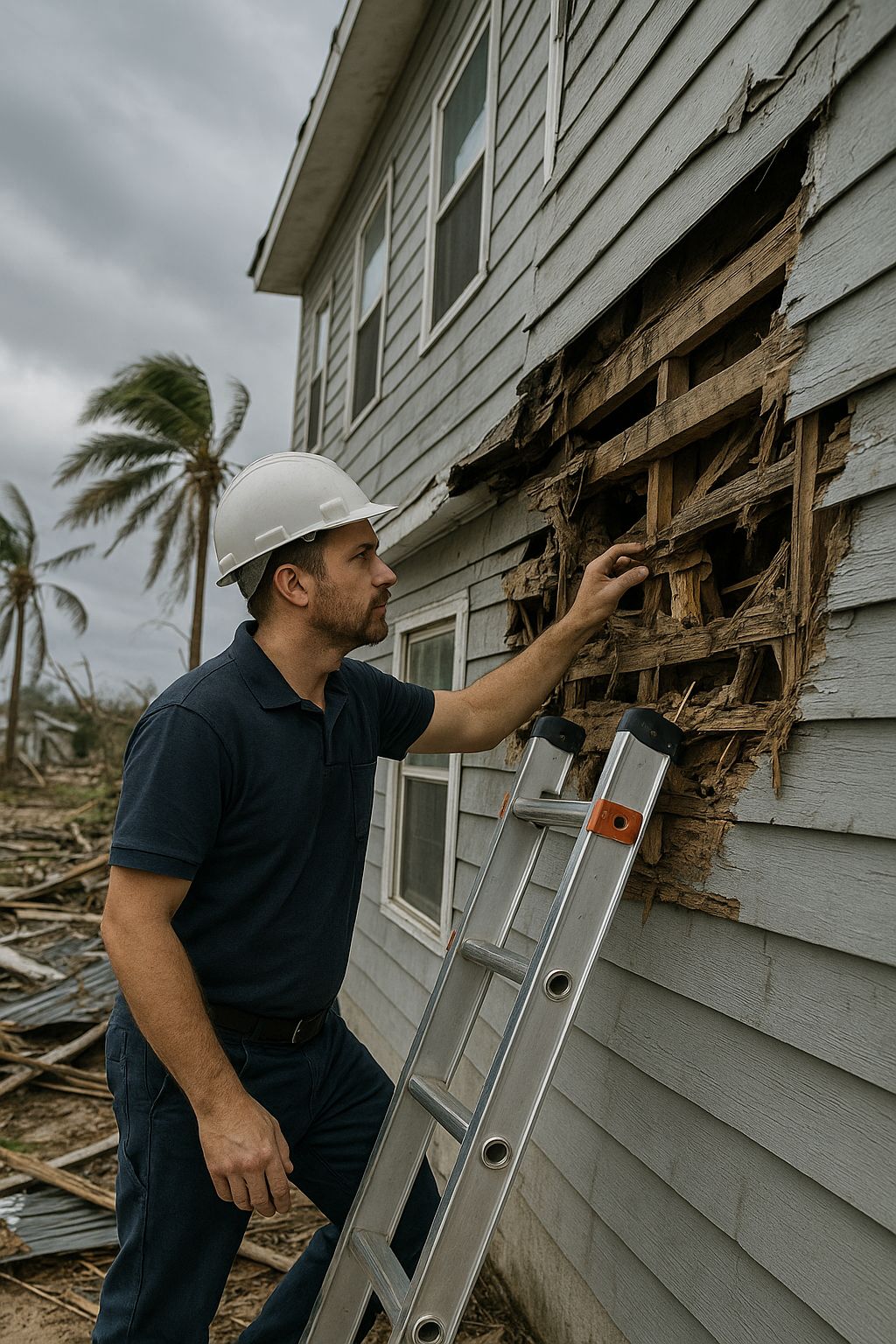
Hurricane Ties: Why Every Central Florida Home Needs Them
Key Takeaways
- Hurricane ties are essential metal connectors that create a continuous load path between your roof, walls, and foundation, preventing catastrophic structural failure during storms.
- Florida Building Code requires hurricane ties in all new construction, but homes built before 2002 likely need retrofitting to meet current standards.
- Installing hurricane ties can reduce home insurance premiums by up to 15% while significantly increasing your property’s resilience and value.
- Proper installation by qualified professionals ensures maximum protection against winds exceeding 130 mph in Category 3+ hurricanes.
- APC Roofing provides expert hurricane tie installation and roof assessments to ensure Central Florida homes meet or exceed current building codes.
Hurricane Force: The Real Threat to Central Florida Homes
When a hurricane barrels toward Central Florida, your home faces a battle against nature’s most destructive forces. During these powerful storms, wind doesn’t just blow against your house—it creates powerful upward suction that can literally tear your roof from its foundation. This devastating phenomenon has destroyed thousands of Florida homes, turning dreams into debris in mere minutes.
Most Central Florida homeowners understand the importance of hurricane shutters and impact-resistant windows, but many overlook one of the most critical components of hurricane protection: the humble hurricane tie. These small metal connectors form the backbone of your home’s wind resistance system. Without properly installed hurricane ties, even homes with other hurricane protections remain vulnerable to catastrophic structural failures during severe storms.
The threat is particularly acute in Central Florida, where we experience the dual hazard of both Atlantic hurricanes and powerful summer thunderstorms that can generate dangerous straight-line winds. According to APC Roofing, one of Central Florida’s leading roofing specialists, roof damage accounts for nearly 70% of hurricane-related insurance claims in the region. This statistic underscores the critical importance of securing your roof with proper hurricane ties before the next storm hits.
What Are Hurricane Ties and How Do They Protect Your Home?
Hurricane ties are specialized metal connectors designed to create secure attachment points between your home’s structural components. These galvanized steel brackets connect your roof trusses or rafters to the top plate of your home’s walls, creating a continuous load path that transfers the force of wind uplift from the roof down through the walls and into the foundation. Without these critical connections, powerful winds can exploit the weak points in your roof system, potentially causing catastrophic failure during a hurricane.
The Critical Role of Hurricane Ties in Roof Stability
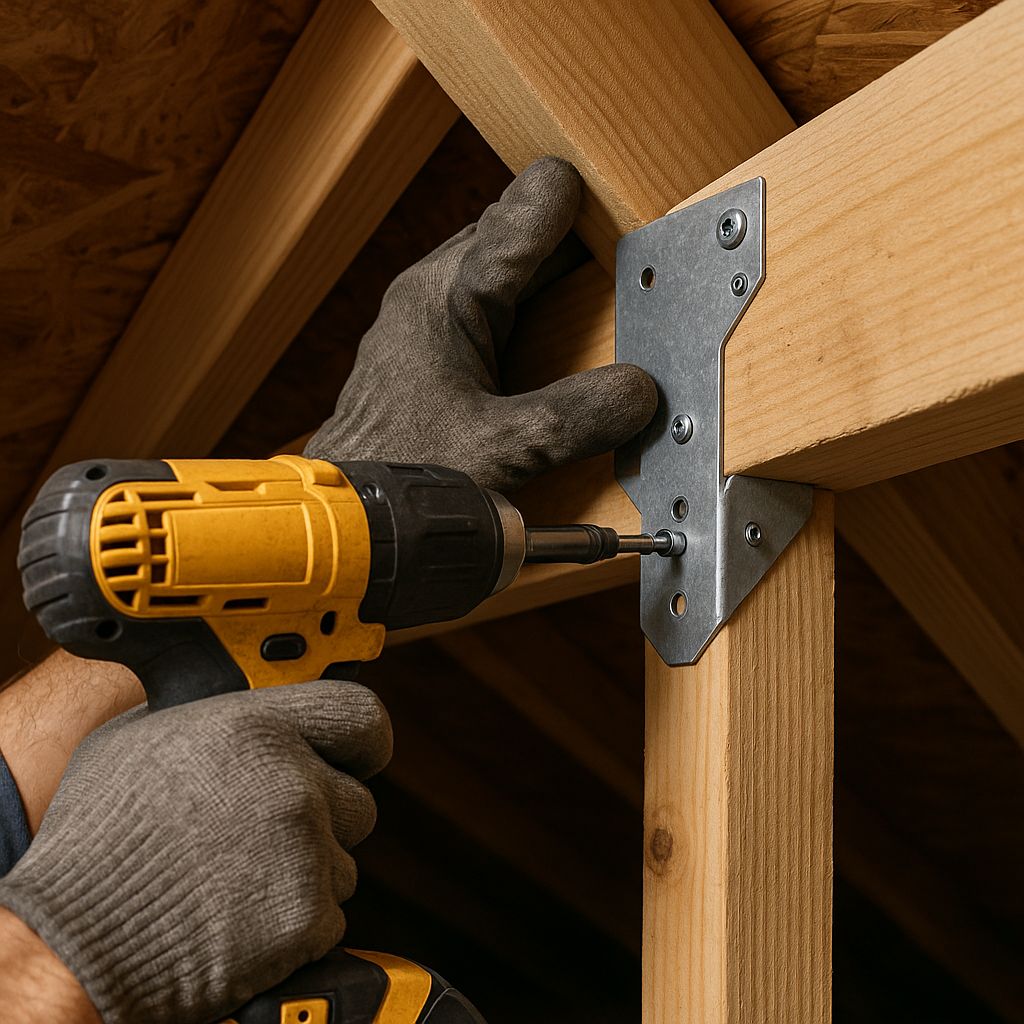
Your roof system faces enormous stress during a hurricane. As winds pass over your roof, they create a powerful lifting effect—similar to how airplane wings generate lift. This uplift can exceed 100 pounds per square foot in Category 3+ hurricanes, generating thousands of pounds of force on your roof structure. Standard nailing techniques simply cannot withstand these forces.
Hurricane ties dramatically increase the connection strength between roof elements and wall framing. A properly installed hurricane tie can resist upward forces exceeding 1,000 pounds at each connection point. With dozens of these ties distributed throughout your roof system, your home gains the structural integrity needed to resist even the most powerful hurricane-force winds.
When integrated into a complete continuous load path system, hurricane ties ensure that wind forces transfer safely through your entire home structure rather than concentrating at vulnerable connection points. This systematic approach to wind resistance is why hurricane ties have become mandatory in Florida building codes for all new construction.
How Hurricane Ties Create a Continuous Load Path
The concept of a continuous load path is fundamental to understanding hurricane protection. Think of your home as a chain—it’s only as strong as its weakest link. Traditional construction methods often create weak points where structural elements meet, especially between horizontal and vertical components like roof trusses and wall studs.
Hurricane ties eliminate these weak points by creating mechanical connections that resist both lifting and lateral forces. These ties connect key structural junction points throughout your home, including roof-to-wall connections, wall-to-wall connections between stories, and wall-to-foundation connections. When properly installed throughout your home, hurricane ties create an unbroken chain of resistance from your roof peak down to your foundation, allowing wind forces to dissipate safely without causing catastrophic failures.
Types of Hurricane Ties for Different Home Structures
Hurricane ties come in various designs to accommodate different roof structures and connection needs. The most common types include H2.5 ties for light-duty connections, H3 ties for medium-duty applications, and H10 ties for heavy-duty situations where maximum uplift resistance is required. Other specialized hurricane ties include twist straps, hurricane clips, and embedded truss anchors—each designed for specific structural configurations and wind resistance requirements.
Hurricane Tie Failure: The Costly Consequences
The consequences of inadequate hurricane protection can be devastating both financially and emotionally. When hurricane ties fail or are absent altogether, homes typically experience progressive structural collapse. The process usually begins with roof uplift, followed by wall failure, and ultimately complete structural collapse. Insurance data from recent Florida hurricanes shows that homes without proper hurricane ties suffered total losses at nearly three times the rate of properly secured structures.
Catastrophic Roof Damage and Total Home Loss
When hurricane-force winds breach your roof system, the damage extends far beyond missing shingles. Once your roof structure begins to fail, wind and water gain access to your home’s interior, causing extensive damage to walls, ceilings, electrical systems, and personal possessions. Even partial roof failures often lead to total home losses due to water intrusion and structural compromise.
Insurance Coverage Issues After Storms
The financial aftermath of hurricane damage can be just as devastating as the physical destruction. Many homeowners are shocked to discover that their insurance policies may deny or reduce claims for homes lacking proper hurricane protection measures. Insurance companies increasingly scrutinize claims for evidence of code compliance and proper hurricane mitigation features.
In the wake of recent catastrophic hurricane seasons, many Florida insurers have implemented stricter requirements for wind damage coverage. Homes without hurricane ties may face significantly higher deductibles, reduced coverage limits, or even policy cancellations. Some insurance companies now require wind mitigation inspections that specifically check for the presence and proper installation of hurricane ties before renewing policies in high-risk zones.
Florida Building Code Requirements for Hurricane Protection
Florida’s building codes have evolved significantly in response to devastating storms like Hurricane Andrew in 1992, which exposed critical weaknesses in residential construction standards. Today’s Florida Building Code contains some of the nation’s most stringent requirements for wind resistance, particularly in high-velocity hurricane zones (HVHZ) along the coast.
Current Standards for New Construction
All new residential construction in Florida must include hurricane ties as part of a comprehensive wind resistance system. The specific requirements vary by location, with coastal areas facing the strictest standards. In Central Florida (Wind Zone 3), homes must be designed to withstand wind speeds of 120-130 mph, requiring robust hurricane tie systems throughout the roof structure.
Current code mandates include specific requirements for the type, quantity, and placement of hurricane ties. For example, in most Central Florida locations, each truss or rafter must connect to wall plates using approved hurricane ties capable of resisting both uplift and lateral forces. Additional requirements address secondary connections between structural elements, ensuring a complete continuous load path from roof to foundation.
The code also specifies proper fastener types and quantities for hurricane tie installation, typically requiring special nails or screws designed for structural connections. These fasteners must penetrate both the roof member and the supporting structure by specific minimum depths to achieve their rated strength.
Requirements for Existing Homes and Renovations
Florida’s building code takes a nuanced approach to existing structures. While homes built before the current codes aren’t automatically required to upgrade to new standards, any substantial renovation (typically defined as work exceeding 50% of the home’s value) triggers mandatory compliance with current hurricane protection requirements, including hurricane tie installation.
Additionally, many Florida municipalities have implemented local ordinances that exceed state minimums, requiring hurricane tie retrofitting during reroof projects or when obtaining permits for other significant work. Central Florida homeowners should consult with local building departments before undertaking any major renovations to understand the hurricane protection requirements that may apply to their specific project.
5 Signs Your Central Florida Home Needs Hurricane Ties
Determining whether your home needs hurricane ties isn’t always obvious to the untrained eye. Most of these crucial connectors remain hidden in attic spaces or behind finished surfaces. However, several key indicators suggest your home may lack adequate hurricane protection.
- Visible roof movement during high winds
- Creaking or popping sounds from the attic during storms
- Failed wind mitigation inspections
- Higher than average insurance premiums
- Previous storm damage to roof structures
If you’ve noticed any of these warning signs, it’s crucial to have a professional roofing contractor conduct a thorough inspection of your home’s hurricane readiness. Early intervention with proper hurricane tie installation can prevent catastrophic damage during the next major storm.
Let’s examine the five most common indicators that your home needs hurricane ties in greater detail.
1. Your Home Was Built Before 2002
The year 2002 marked a significant turning point in Florida building practices with the implementation of the first statewide building code that mandated comprehensive hurricane protection measures. Homes constructed before this watershed year typically lack adequate hurricane ties or may have outdated connector types that don’t meet current standards for wind resistance.
If your Central Florida home predates 2002, there’s a high probability it requires hurricane tie retrofitting to meet current safety standards. Even homes built between 2002 and 2010 may benefit from hurricane tie upgrades, as the code requirements have continued to evolve and strengthen based on new research and post-hurricane damage assessments.
2. Visible Gaps Between Roof Trusses and Wall Plates
A telltale sign of inadequate hurricane protection is visible gaps or loose connections between your roof structure and wall framing. In properly secured homes, these connections should be tight and reinforced with appropriate hurricane ties. An inspection of your attic space can reveal whether your home has these critical connectors installed.
- Look for metal brackets or straps connecting roof trusses to wall top plates
- Check that existing hurricane ties are properly installed with all required fasteners
- Verify that connectors show no signs of corrosion, bending, or damage
- Ensure hurricane ties are present at every truss or rafter connection
If your inspection reveals missing or inadequate hurricane ties, your home likely requires professional retrofitting to achieve proper hurricane protection. Remember that partial hurricane tie installation provides incomplete protection—every truss or rafter connection requires proper securing to create an effective continuous load path.
Even seemingly minor issues like missing nails in hurricane ties can significantly reduce their effectiveness. Research shows that hurricane ties missing just two of their required fasteners can lose up to 60% of their rated strength, potentially leading to connection failure during a storm.
3. Previous Wind Damage to Your Roof
Homes that have already experienced wind damage, even from less powerful storms than hurricanes, demonstrate vulnerability that often indicates inadequate hurricane ties. Damage patterns like partially lifted shingles, displaced roof sections, or damage concentrated at roof edges and corners suggest your home’s roof-to-wall connections may be insufficient to withstand stronger future storms.
When repairing previous storm damage, seize the opportunity to upgrade your home’s hurricane protection system. Many homeowners make the mistake of simply replacing damaged roofing materials without addressing the underlying structural vulnerabilities that allowed the damage to occur in the first place. Adding hurricane ties during roof repairs typically adds minimal cost while dramatically improving future storm resistance.
4. Failed Home Inspection for Hurricane Readiness
Wind mitigation inspections have become standard practice for Florida homeowners seeking insurance discounts or coverage. These specialized inspections specifically evaluate your home’s ability to withstand hurricane-force winds. If your home failed a wind mitigation inspection or received poor ratings for roof-to-wall connections, this indicates a critical need for hurricane tie installation.
Insurance inspectors are trained to look for specific hurricane protection features, with roof-to-wall connections being one of the most important assessment areas. A failed inspection not only affects your insurance premiums but serves as a professional assessment that your home lacks adequate protection against storms. Consider these inspection failures as early warning signs that your home requires immediate hurricane tie retrofitting.
5. High Insurance Premiums Due to Structural Vulnerabilities
Florida homeowners insurance rates have skyrocketed in recent years, but properties with proper hurricane protection often qualify for substantial discounts. If you’re paying significantly higher premiums than neighbors with similar homes, inadequate hurricane ties might be a contributing factor. Insurance companies use sophisticated risk models that specifically account for the presence of hurricane ties when calculating premiums.
Many homeowners are surprised to discover that investing in hurricane tie installation can reduce insurance premiums by 10-15% annually, often paying for the improvement within just a few years. Beyond the immediate insurance savings, the peace of mind and protection value far exceed the modest investment required for proper hurricane tie installation.
The Cost vs. Benefit of Installing Hurricane Ties
When evaluating hurricane protection measures, homeowners naturally consider the financial equation: Do the benefits justify the costs? For hurricane ties, the cost-benefit analysis overwhelmingly favors installation. The relatively modest investment in hurricane ties delivers exceptional returns in terms of protection value, insurance savings, and home appreciation.
Average Installation Costs in Central Florida
The cost of hurricane tie installation varies based on your home’s size, roof configuration, and accessibility. For a typical 2,000-square-foot Central Florida home, professional hurricane tie installation generally ranges from $800 to $2,500 for retrofit applications. New construction integration is significantly less expensive, typically adding only $200-$500 to building costs.
These costs reflect professional installation by qualified contractors, including all necessary materials and labor. While DIY options exist, professional installation ensures proper placement, fastener selection, and compliance with current building codes—critical factors in achieving the full protection benefits of hurricane ties.
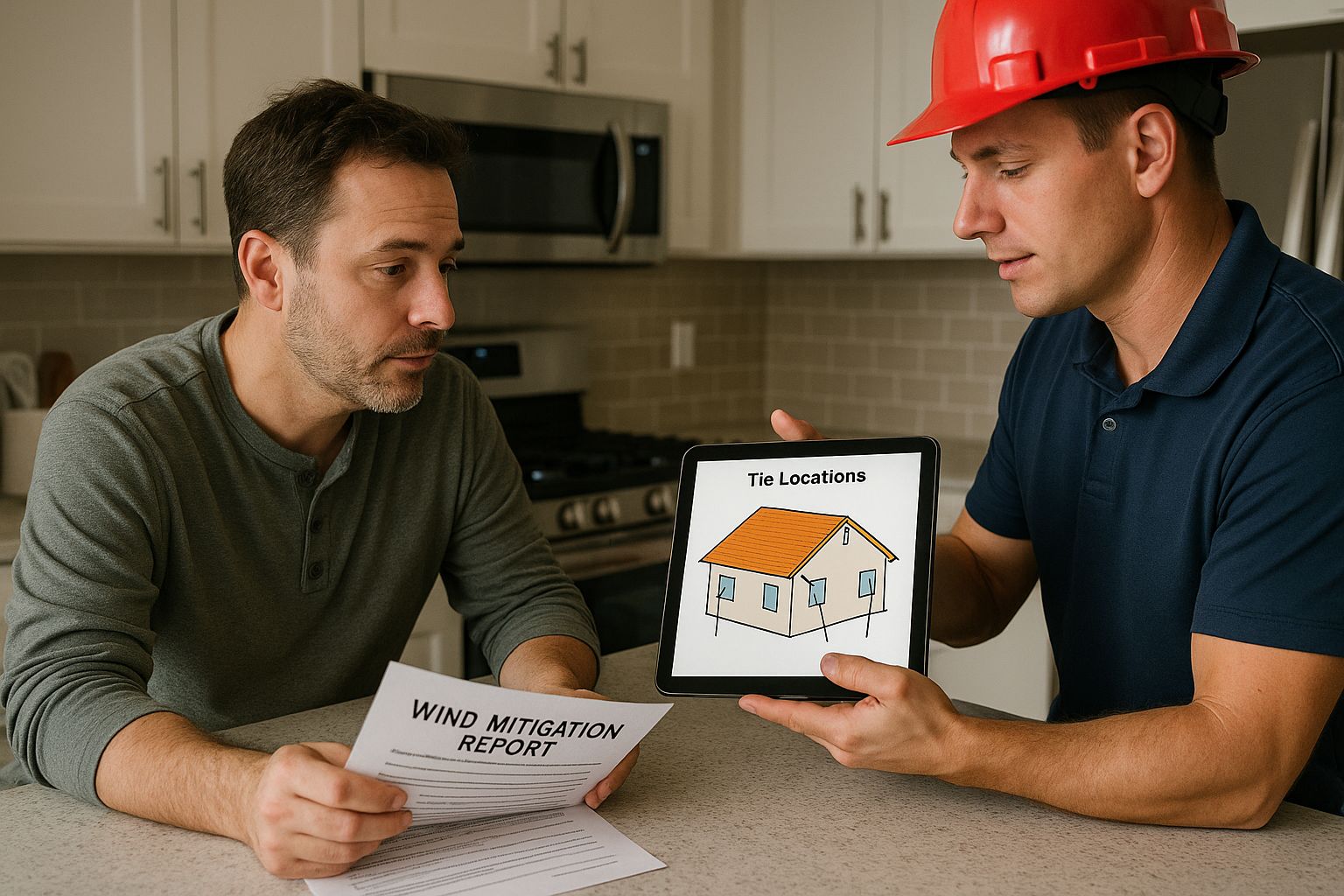
Hurricane Tie Installation: Cost-Benefit Analysis for Typical Central Florida Home
Initial investment: $800-$2,500
Annual insurance savings: $200-$600
Home value increase: 3-7% ($6,000-$14,000 on $200,000 home)
Potential storm damage prevention: $20,000-$200,000+
Return on investment timeframe: 2-5 years (insurance savings alone)
Peace of mind: Priceless
Potential Insurance Premium Savings
Hurricane tie installation typically qualifies for substantial insurance discounts through Florida’s wind mitigation credit system. Most Florida insurers offer premium discounts ranging from 10% to 15% for homes with verified hurricane tie systems that create a complete load path. For a typical Central Florida home with a $2,000 annual premium, these discounts translate to $200-$300 in annual savings.
To maximize insurance savings, ensure your hurricane tie installation is documented with before-and-after photographs and verified by a certified wind mitigation inspector. This documentation provides proof of compliance to your insurance company and ensures you receive all eligible discounts. Some insurance companies even offer additional discounts when hurricane ties are installed as part of a comprehensive storm protection system.
Home Value Increase After Hurricane Retrofitting
Beyond insurance savings, hurricane tie installation adds tangible value to your home. Real estate data from Florida markets shows that homes with documented hurricane protection features command premium prices and sell faster than comparable properties lacking these features. The value-add typically ranges from 3-7% of home value—significantly exceeding the installation cost.
This value increase becomes particularly important when selling your home, as buyers increasingly prioritize hurricane readiness in their purchasing decisions. Documented hurricane tie installation provides objective evidence that your home offers superior protection against one of Florida’s most significant natural hazards.
DIY or Professional Installation: Making the Right Choice
Homeowners facing hurricane tie decisions often wonder whether DIY installation is a viable option. While hurricane ties themselves are relatively simple devices, their effectiveness depends entirely on proper selection, placement, and fastening. The critical nature of these connections in protecting your home during life-threatening storms makes this decision particularly important.
When DIY Installation Makes Sense
For homeowners with significant construction experience and knowledge of structural connections, DIY hurricane tie installation may be appropriate in limited circumstances. This approach works best for homes with easily accessible attic spaces and simple roof configurations. DIYers should be prepared to research current building code requirements, purchase specialized fasteners, and follow manufacturer installation guidelines precisely.
If pursuing DIY installation, consider these essential requirements:
- Complete understanding of your local building code requirements for hurricane ties
- Ability to identify and properly secure to structural framing members
- Access to specialized structural fasteners and installation tools
- Willingness to document the installation process for future inspection
- Understanding of proper spacing and placement for maximum effectiveness
Even experienced DIYers should consider having their work inspected by a professional to verify proper installation. Remember that improperly installed hurricane ties may provide a false sense of security while failing to deliver adequate protection during actual storms.
Why Most Homeowners Should Choose Professional Installation
For the vast majority of homeowners, professional hurricane tie installation offers significant advantages over DIY approaches. Professional installers bring specialized knowledge, experience, and equipment that ensure hurricane ties perform as designed during critical storm situations. They understand the specific requirements of Florida’s building codes and can identify and address related structural issues that might compromise your home’s hurricane resistance.
Beyond Hurricane Ties: Creating a Complete Storm Defense System
While hurricane ties form a critical component of storm protection, they work best as part of an integrated defense system. Comprehensive hurricane protection addresses all vulnerable areas of your home, creating multiple layers of defense against wind, water, and flying debris. Modern storm protection systems combine structural reinforcement with specialized building envelope components designed to resist hurricane forces.
Impact-Resistant Windows and Doors
Windows and doors represent significant vulnerability points during hurricanes, both from direct wind pressure and from impacts by wind-borne debris. Impact-resistant windows feature laminated glass similar to car windshields, allowing them to withstand direct impacts without shattering. These specialized windows maintain the building envelope even when cracked, preventing the pressure differentials that can lead to catastrophic structural failures.
When paired with hurricane ties, impact-resistant windows and doors create a synergistic protection system. The hurricane ties prevent roof uplift while the impact-resistant openings prevent internal pressurization that could amplify forces on the roof structure. This integrated approach provides significantly greater protection than either system alone.
Roof Strapping and Bracing Options
Advanced hurricane protection systems often incorporate additional roof reinforcement beyond basic hurricane ties. Lateral bracing of gable ends, ridge strapping, and secondary water barriers beneath roofing materials provide complementary protection that addresses different aspects of storm vulnerability. These systems work together to maintain roof integrity under the complex forces generated during hurricanes.
Foundation Anchoring Systems
The most comprehensive hurricane protection creates a continuous load path from roof to foundation. Foundation anchoring systems use specialized connectors to secure wall framing directly to concrete foundations, preventing lateral movement and uplift at the base of the structure. These systems complete the load path initiated by hurricane ties, ensuring that wind forces transfer safely through the entire structure into the ground.
For Central Florida homes, professional roof contractors can evaluate your specific needs and recommend the most cost-effective combination of hurricane protection measures. This tailored approach ensures you invest in the protections that deliver the greatest benefit for your specific home configuration and location.
By integrating hurricane ties with these complementary systems, homeowners create a defense-in-depth approach that significantly enhances storm survival probability. Each system addresses specific vulnerabilities, with the combined effect exceeding the protection offered by any single measure.
Act Now to Protect Your Home Before the Next Storm
- Schedule a professional hurricane readiness inspection to identify vulnerabilities
- Obtain multiple quotes from qualified contractors specializing in hurricane protection
- Contact your insurance company to understand available discounts for hurricane tie installation
- Document your current roof connections for comparison after improvements
- Consider combining hurricane tie installation with other scheduled roof maintenance
The time to install hurricane ties is well before storm warnings appear on weather radars. Hurricane protection requires advance planning and professional installation under controlled conditions. Waiting until storm season arrives often means facing contractor backlogs, materials shortages, and rushed installations that may compromise effectiveness.
Central Florida’s unpredictable weather patterns mean that severe storms can threaten with minimal warning. Investing in hurricane ties now provides immediate protection that remains in place year-round, ready to perform when severe weather strikes. This proactive approach to home protection aligns with the wisdom that has guided Florida’s most storm-resilient communities: prepare thoroughly during fair weather to weather the inevitable storms.
For homeowners seeking expert guidance on hurricane tie installation and comprehensive roof protection, APC Roofing offers professional assessments tailored to Central Florida’s unique hurricane risks. Their experienced team can identify your home’s specific vulnerabilities and recommend the most effective protection strategies for your budget and needs.
Frequently Asked Questions
As Central Florida homeowners consider hurricane tie installation, several common questions arise. These answers provide quick guidance on the most frequently asked hurricane tie questions.
How long does hurricane tie installation typically take?
For most average-sized homes, professional hurricane tie retrofitting takes 1-2 days to complete. The timeline depends on your home’s size, roof complexity, and accessibility of connection points. New construction integration happens during the framing stage and adds minimal time to the building process. Your contractor should provide a specific timeframe after inspecting your home’s particular configuration.
Can hurricane ties be installed on any type of roof?
Hurricane ties can be adapted to most residential roof types, including truss systems, rafter framing, and engineered roof components. However, the specific type of hurricane tie and installation method varies based on your roof construction. Some older homes with unusual framing systems may require custom solutions designed by structural engineers. A professional roofing contractor can assess your specific roof system and recommend appropriate hurricane tie options.
Will my homeowners insurance cover hurricane tie installation?
Standard homeowners insurance typically doesn’t cover preventative measures like hurricane tie installation. However, some insurance companies offer special programs that subsidize or incentivize hurricane protection improvements. Additionally, if you’re repairing insured storm damage, your policy may cover code-required upgrades including hurricane ties. Check with your insurance agent about specific programs that might help offset installation costs, and remember that the premium discounts after installation often recover the investment within a few years.
Do hurricane ties need maintenance after installation?
Once properly installed, hurricane ties require minimal maintenance. During annual roof inspections, have your contractor verify that connections remain secure and free of significant corrosion. In coastal areas with salt exposure, galvanized or stainless steel hurricane ties may eventually show corrosion and require replacement—typically after 15-25 years. Most inland Central Florida installations remain effective for the life of the roof structure when properly installed with corrosion-resistant fasteners.
Can I install hurricane ties myself if I have construction experience?
While technically possible for those with significant construction knowledge, DIY hurricane tie installation presents several challenges. Proper installation requires understanding of structural load paths, correct fastener selection, and precise placement according to current building codes. Additionally, improper installation may invalidate potential insurance discounts and could create a false sense of security. For most homeowners, professional installation ensures proper protection and documentation for insurance purposes, with costs often offset by premium discounts and increased home value.
Hurricane ties represent one of the most cost-effective investments Central Florida homeowners can make in protecting their property and family from storm damage. These simple yet critical components create the structural integrity needed to withstand Florida’s inevitable hurricanes and severe storms. By understanding their importance and ensuring proper installation, you take a significant step toward creating a truly storm-resistant home.
Protect your Roof. Lower Your Premiums. Sleep Better Before the Next Storm.
CK Select Roofing installs code-compliant hurricane ties and provides wind-mitigation documentation that can reduce your insurance costs and boost your home’s resilience.
Visit CK Select Roofing to schedule your hurricane-tie assessment with CK Select Roofing today.
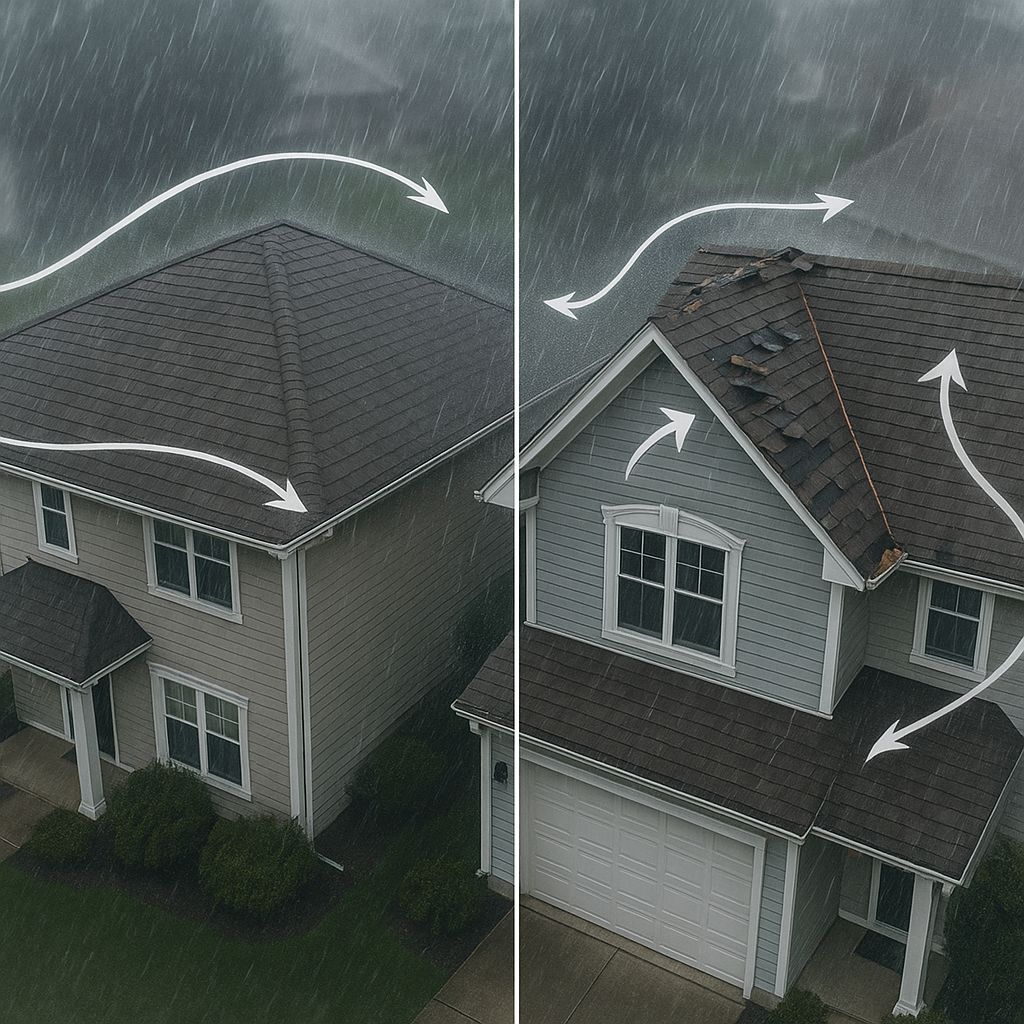
How Hip Roofs Perform Better in Florida Hurricane Winds
Key Takeaways: Hip Roof Hurricane Protection
- Hip roofs offer up to 40% better wind resistance than gable roofs during Florida hurricanes due to their aerodynamic four-sided design
- Homeowners with hip roofs can save up to 32% on insurance premiums in Florida’s hurricane-prone regions
- Hip roofs distribute wind pressure more evenly, significantly reducing the risk of catastrophic roof failure during storms
- Florida building codes now recognize hip roofs as preferred structures in high-velocity hurricane zones (HVHZ)
- While initially more expensive, hip roofs provide substantial long-term protection and financial benefits for Florida homeowners
When hurricane-force winds bear down on Florida homes, your roof design can mean the difference between minor repairs and catastrophic damage. As a Florida homeowner, understanding this critical distinction could save you thousands in repair costs and countless headaches during storm season.
Florida’s Hurricane Challenge: Why Your Roof Design Matters
Florida’s relationship with hurricanes is long and tumultuous. With over 1,350 miles of coastline exposed to the Atlantic Ocean and Gulf of Mexico, the Sunshine State faces more hurricane threats than any other U.S. state. The devastating impacts of hurricanes like Andrew (1992), Irma (2017), and Michael (2018) have reshaped not only landscapes but also how we approach residential construction.
When hurricane-force winds—sometimes exceeding 150 mph—collide with your home, the roof typically experiences the most significant stress. It’s not just about withstanding direct wind force; it’s about managing the complex pressure systems that develop around your home during a storm. Schneider Insurance data shows that roof damage accounts for approximately 70-90% of insured residential hurricane losses, making your roof’s design perhaps the most crucial element in your home’s hurricane defense system.
Modern building science has revealed that not all roof designs perform equally when facing these brutal forces. The shape, pitch, and construction method of your roof dramatically influence how it handles hurricane-strength winds. Among the various roof designs, hip roofs have consistently demonstrated superior performance—and understanding why could be vital to protecting your Florida home.
Hip Roofs vs. Gable Roofs: The Critical Structural Differences
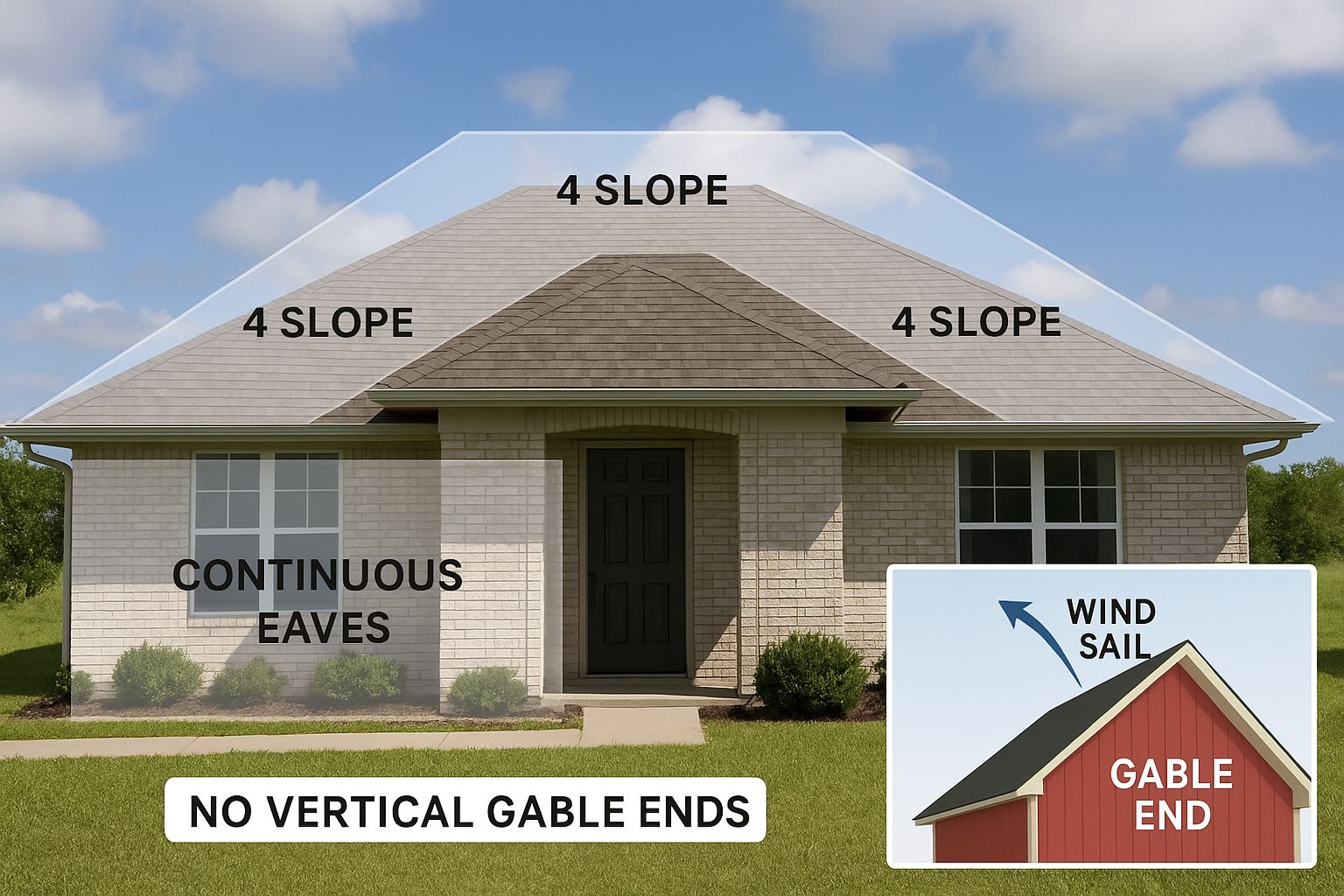
To understand why hip roofs excel in hurricane conditions, we must first identify what makes them structurally different from their more common counterpart, the gable roof. These differences aren’t just aesthetic—they fundamentally change how your home responds to extreme weather events.
What Makes a Hip Roof Different
A hip roof features slopes on all four sides that come together at the top to form a ridge (sometimes just a point on smaller structures). This creates a self-bracing, structurally sound design with no vertical ends. The four-sided approach means that no matter which direction hurricane winds blow from, they encounter a sloped surface that can help deflect and channel wind forces more effectively than flat surfaces. The inward slopes on all sides also create a naturally more rigid and stable structure, with walls that receive equal support from the roof structure above.
Why Gable Roofs Are More Vulnerable in Hurricanes
Gable roofs, with their familiar triangular ends, have two sloped sides that meet at a central ridge with vertical gable ends on two sides. These vertical gable ends become particularly problematic during hurricanes. When hurricane winds hit these flat, vertical surfaces, they create immense pressure that can cause the gable end to collapse inward or outward. Furthermore, the vertical ends offer less structural stability to the overall roof system, making gable roofs more susceptible to uplift forces that can literally tear a roof from its supports.
Post-hurricane assessments consistently show that gable roofs suffer significantly more damage than hip roofs in the same neighborhoods experiencing identical wind conditions. The vertical ends not only catch wind like a sail but can also create dangerous pressure differentials that stress the entire roof structure beyond its breaking point.
The Four-Sided Advantage During High Winds
The four sloping sides of a hip roof create an inherent structural advantage that becomes crucial during hurricane conditions. This design distributes wind pressure more evenly across the entire structure rather than concentrating force on vulnerable areas. When hurricane winds strike a hip roof from any direction, they encounter a similar aerodynamic profile, which helps minimize pressure differences that could lead to structural failure.
Additionally, the four-sided design creates multiple triangular planes that naturally reinforce each other, forming an inherently rigid structure. This rigidity helps prevent the progressive failure that often occurs with gable roofs, where damage to one section quickly cascades throughout the entire roof system. Engineers have found that this four-sided approach can reduce peak wind pressures by 20-40% compared to gable designs, which can make the critical difference between a roof that survives and one that fails catastrophically during a hurricane.
The Science of Wind Resistance in Hip Roof Designs
Understanding the physics behind hurricane wind interactions with different roof structures reveals why hip roofs consistently outperform other designs. When hurricane-force winds—which can exceed 150 mph in Category 5 storms—make contact with a building, complex aerodynamic forces come into play that can spell disaster for poorly designed structures.
These forces don’t just push against your home; they create pressure differentials that can literally pull a roof apart. The science behind wind resistance isn’t just theoretical—it’s backed by decades of wind tunnel testing and real-world post-storm assessments.
How Hurricane Winds Interact With Different Roof Shapes
When hurricane winds strike a home, they don’t simply push against it in a straight line. Instead, they create complex airflow patterns that generate both positive pressure (pushing) on windward surfaces and negative pressure (pulling) on leeward surfaces and the roof itself. This negative pressure, or suction effect, is often what causes catastrophic roof failures, as it can lift roofing materials and even entire roof structures away from the building.
Hip roofs handle these complex wind patterns far better than gable roofs because they present sloped surfaces to the wind regardless of direction. Wind flowing over a hip roof creates more consistent pressure distributions without the dramatic pressure differentials that occur at the corners and edges of gable roofs. This reduces the likelihood of localized failures that can quickly cascade into complete roof system collapse.
Pressure Distribution and Uplift Forces
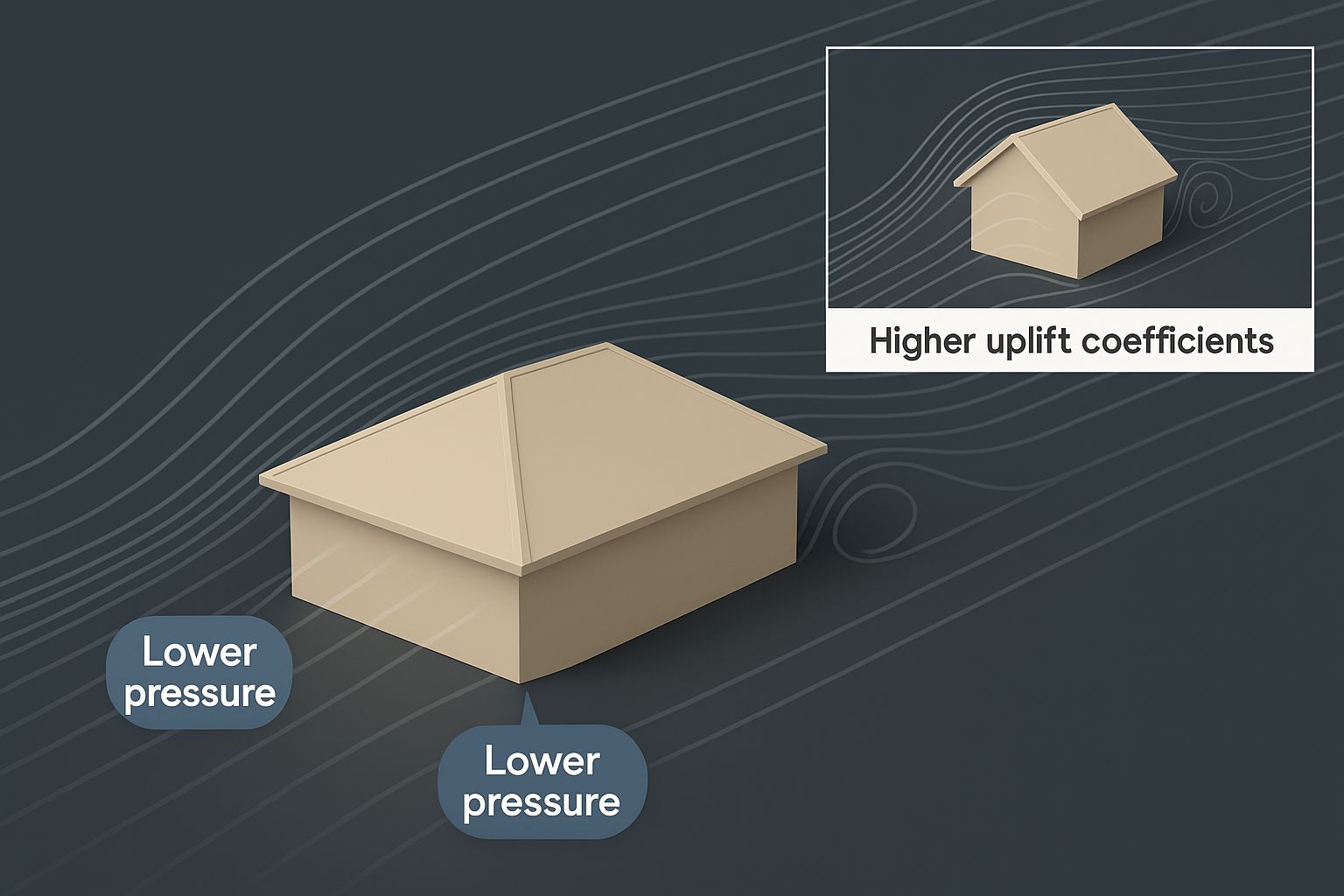
One of the most dangerous effects during a hurricane is uplift—the suction force that tries to lift your roof off your home. Wind tunnel studies show that hip roofs experience approximately 40% less uplift force than comparable gable roofs in the same wind conditions. This significant reduction occurs because the wind flows more smoothly over the hip roof’s sloped surfaces without creating the strong vortices (swirling air currents) that form along the edges and corners of gable roofs.
The reduced uplift is particularly important at the corners and edges of the roof, where damage typically begins. Hip roofs distribute these forces more evenly across the entire structure, preventing the concentration of stress that can tear roofing materials away and compromise structural integrity.
The Aerodynamic Edge: Wind Flow Over Hip Roofs
Hip roofs possess an inherent aerodynamic advantage that becomes crucial during hurricane conditions. Their shape allows wind to flow more smoothly over all surfaces, similar to how an airplane wing is designed to minimize turbulence. When hurricane winds encounter a hip roof, they’re guided up and over without creating the turbulent air pockets that can pry at roofing materials and connections.
This aerodynamic efficiency means less wind energy is transferred to the structure itself. Wind tunnel testing at Florida International University’s Wall of Wind facility has confirmed that hip roofs experience significantly reduced pressure coefficients (measurements of wind force) compared to gable designs, particularly in the critical areas where roof sections meet walls.
Optimal Pitch Angles for Maximum Wind Resistance
The angle of a hip roof’s slope (pitch) plays a crucial role in its hurricane performance. Research indicates that moderately pitched hip roofs—between 4:12 and 6:12 (18.4° to 26.6°)—offer the optimal balance of wind resistance and practical construction considerations. This moderate pitch provides sufficient slope for wind deflection without creating excessive height that would increase wind loads on the structure.
Very low-pitched hip roofs (below 3:12) sacrifice some aerodynamic benefits and may experience higher uplift forces, while extremely steep pitches can increase the surface area exposed to wind forces. Florida building codes now recognize this science by offering greater design pressure reductions for hip roofs within this optimal pitch range.
Real-World Performance: Hip Roofs in Past Florida Hurricanes
Theory and laboratory testing provide valuable insights, but the real proof of hip roof superiority comes from examining actual hurricane aftermath. Post-storm damage assessments consistently reveal striking patterns that validate the scientific predictions about roof performance.
Case Study: Hurricane Irma Roof Performance
When Hurricane Irma swept across Florida in 2017, it created a real-world laboratory for assessing roof performance. In neighborhoods throughout Southwest Florida where winds reached 130+ mph, damage patterns were remarkably consistent. Homes with hip roofs experienced approximately 70-80% less catastrophic roof failures than neighboring properties with gable roofs constructed during the same period.
One particularly revealing study in Cape Coral found that among 800 homes surveyed in a subdivision hit by Irma’s eyewall, only 3% of homes with hip roofs suffered major structural roof damage, compared to 19% of homes with gable roofs. These weren’t just minor differences—they represented the dividing line between homes that remained habitable and those that required complete rebuilding.
What Building Inspectors Found After Major Storms
Professional assessments by building inspectors following hurricanes Michael, Irma, and earlier storms have consistently documented specific failure patterns in gable roofs that rarely occur in hip roof structures. The most common failure points include gable end collapses, roof sheathing loss starting at corners and edges, and progressive failures where initial damage quickly spreads across the entire roof system. These patterns appeared so consistently that they’ve directly informed building code revisions and insurance underwriting standards throughout Florida.
Florida Building Codes and Insurance Benefits
Florida’s painful hurricane history has led to some of the nation’s most stringent building codes, particularly regarding roof construction. These codes recognize the superior performance of hip roofs and create tangible incentives for homeowners who choose this design.
The evolution of these regulations directly reflects the lessons learned from each major hurricane. After Hurricane Andrew devastated South Florida in 1992, revealing catastrophic weaknesses in building practices, Florida completely overhauled its building codes. These reforms have continued to evolve with each subsequent major storm, increasingly favoring hip roof designs.
Current Code Requirements for Hurricane Zones
Florida’s building code now categorizes certain coastal areas as High-Velocity Hurricane Zones (HVHZ), with specific provisions that favor hip roof construction. In these zones, gable roof designs face more stringent requirements, including specialized bracing and reinforcement that can significantly increase construction costs. Hip roofs, by contrast, inherently meet many of these requirements through their design, making them increasingly the default choice for new construction in hurricane-prone regions.
The Florida Building Code now recognizes the superior performance of hip roofs by allowing reduced design pressures for hip roofs compared to gable designs. This translates to potentially lower construction costs for roof connections and components while still meeting or exceeding safety standards. The code specifically grants a 10% reduction in roof design pressure for hip roofs with slopes between 4:12 and 6:12 – a significant advantage that reflects their real-world performance advantages.
Insurance Discounts for Hip Roof Homes
Florida’s insurance companies have taken notice of the dramatic performance differences between roof designs during hurricanes. Most major insurers now offer substantial premium discounts for homes with hip roofs, recognizing that these structures are far less likely to result in catastrophic claims. These discounts aren’t trivial – they can significantly impact your long-term homeownership costs in Florida’s increasingly expensive insurance market.
The specific discount percentages vary by insurance provider, location, and other factors, but hip roof discounts typically range from 15% to 32% off the windstorm portion of homeowners insurance premiums. For a typical Florida home, this can translate to annual savings of $400-$1,200. When compounded over the lifetime of homeownership, these savings can offset or even exceed the additional construction costs associated with hip roofs.
Potential Savings on Premiums (Up to 32%)
The financial benefits of hip roofs extend well beyond direct damage prevention. With Florida’s property insurance rates among the highest in the nation – and still climbing – the premium reductions available for hip roof homes can represent one of the few reliable ways to control these escalating costs. The premium savings are particularly significant in coastal and near-coastal areas where windstorm coverage represents a larger portion of the total insurance premium.
For example, a 2,200-square-foot home in Naples might save approximately $900 annually with a hip roof discount. Over a 15-year period, those savings would total $13,500 – often exceeding the additional upfront construction cost of choosing a hip roof design. This financial advantage becomes even more pronounced when factoring in the reduced likelihood of paying out-of-pocket deductibles after storms and the avoided costs of temporary housing during extended repairs.
Strengthening Your Existing Roof Against Hurricanes
While new construction offers the clearest path to implementing hip roof designs, many Florida homeowners face the reality of protecting existing homes with gable roofs. Fortunately, several retrofit options can significantly improve hurricane resistance without complete roof replacement – though none quite match the performance of a properly designed hip roof.
Retrofit Options for Gable Roofs
If your home has a gable roof, several targeted reinforcement strategies can improve its hurricane resistance. Gable end bracing is one of the most cost-effective approaches, involving the installation of diagonal braces connecting the gable end wall to the roof structure and ceiling joists. This reinforcement helps prevent the gable end from collapsing inward or outward during high winds – a common failure point during hurricanes.
Another effective retrofit involves the installation of gable end brackets that connect the roof framing directly to wall structures, providing additional support against uplift and lateral forces. For homes with gable overhangs, securing these vulnerable areas with additional fasteners and hurricane clips can prevent the progressive failure that often begins at these exposed edges.
Hurricane Straps and Structural Reinforcements
Regardless of your roof design, hurricane straps (also called hurricane clips) represent one of the most important reinforcements for Florida homes. These galvanized metal connectors create stronger connections between roof trusses or rafters and the supporting walls, dramatically increasing resistance to uplift forces. Modern building codes require these connections in new construction, but older homes often lack this crucial protection.
Beyond the basic hurricane straps, more comprehensive structural reinforcements can include enhanced sheathing attachment (using ring-shank nails at closer intervals), secondary water barriers beneath roofing materials, and reinforced soffit installations to prevent wind entry into attic spaces. While these improvements don’t transform a gable roof into a hip roof, they can significantly narrow the performance gap during moderate hurricanes.
When to Consider a Full Roof Replacement
For homeowners with older gable roofs, particularly those approaching the end of their service life, converting to a hip roof design may be worth considering. The ideal time for such a conversion is when the roof already requires replacement due to age or damage. Though converting from gable to hip involves significant structural changes and costs considerably more than a simple re-roofing, it provides the opportunity to incorporate state-of-the-art hurricane resistant features while gaining the inherent structural advantages of hip roof design.
This conversion becomes particularly attractive when factoring in the potential insurance savings, increased home value, and peace of mind during future storms. For homes in highly vulnerable coastal locations or for homeowners planning to remain in their homes long-term, the conversion investment often makes financial sense when analyzed over a 10-15 year timeframe.
Cost Considerations: Are Hip Roofs Worth the Investment?
The superior hurricane performance of hip roofs comes with higher initial construction costs – a reality that prompts many homeowners to question whether the investment is worthwhile. Understanding both short-term costs and long-term benefits is essential for making an informed decision.
Initial Construction Cost Comparison
Hip roofs typically cost 15-20% more than comparable gable roofs for new construction. This cost differential stems from several factors: greater complexity in framing, more materials required for the additional slopes, more complicated intersection details, and increased labor for the more intricate construction. For a typical 2,000-square-foot Florida home, this might represent an additional construction cost of $4,000-$8,000 compared to a basic gable design.
However, this straightforward comparison doesn’t tell the complete story. When building in Florida’s High-Velocity Hurricane Zones, the additional bracing and reinforcement required for gable roofs to meet code requirements can significantly narrow this cost gap. In some cases, properly reinforced gable designs may cost nearly as much as hip roofs while still not matching their inherent structural advantages.
Long-Term Savings on Repairs and Insurance
The true financial calculation must consider long-term factors beyond initial construction. Hip roofs typically require fewer repairs over their lifespan, particularly after severe weather events. Even during hurricanes that don’t cause catastrophic failures, gable roofs often suffer localized damage requiring expensive repairs and potentially leading to water intrusion issues. These repeated smaller repair costs can accumulate significantly over time.
The insurance premium differentials mentioned earlier represent perhaps the most predictable financial advantage. Annual savings of $400-$1,200 on insurance premiums add up quickly, often reaching or exceeding the initial cost differential within 5-10 years. Additionally, homes with hip roofs typically maintain higher resale values, particularly in coastal areas where hurricane resistance is a primary concern for buyers.
Return on Investment Timeline
For most Florida homeowners, the break-even point for the additional cost of a hip roof occurs between years 5-8 of ownership, assuming typical insurance savings, reduced maintenance costs, and average storm frequency. This return-on-investment calculation becomes even more favorable in highly hurricane-prone coastal areas or for homeowners planning long-term residency. When factoring in the potential avoided deductibles after major storms (which can range from $2,500 to over $10,000), the financial case becomes even stronger.
Beyond Hurricane Protection: Additional Benefits of Hip Roofs
While hurricane resistance represents the primary advantage of hip roofs in Florida, these designs offer several additional benefits that enhance their overall value. These secondary advantages contribute to both the practical functionality and aesthetic appeal of your home.
The comprehensive benefits of hip roofs extend far beyond storm protection, creating year-round advantages for Florida homeowners. Their balanced appearance and classic profile work well with various architectural styles, from Mediterranean to modern designs, making them a versatile choice for new construction.
The structural characteristics that make hip roofs hurricane-resistant also contribute to their durability in everyday conditions. The inherent stability means less stress on roofing materials, potentially extending their lifespan compared to the same materials installed on gable roofs. This translates to fewer maintenance issues and repairs over the roof’s lifetime.
Many Florida homeowners report that hip roofs provide greater peace of mind during hurricane season. Knowing your home has superior protection against one of Florida’s most persistent threats creates significant psychological benefits that, while difficult to quantify financially, represent real value for residents of storm-prone regions.
- Superior wind resistance through aerodynamic four-sided design
- Insurance premium discounts up to 32% on windstorm coverage
- Enhanced structural stability in all weather conditions
- Better drainage capabilities during heavy Florida downpours
- Increased energy efficiency through more consistent attic temperatures
- Higher resale value and improved curb appeal
Enhanced Drainage During Heavy Florida Rains
Florida’s climate brings not only hurricane winds but also torrential rainfall that can challenge roofing systems. Hip roofs excel in water management because they typically feature eaves on all sides, creating a continuous drainage path that directs water away from the foundation and walls. This consistent drainage pattern prevents the concentrated water flow that often occurs with gable designs, reducing the risk of soil erosion around foundations and water intrusion at wall connections.
Energy Efficiency Advantages
Hip roofs can contribute to better energy efficiency in Florida’s hot climate. The design typically creates more consistent attic spaces with improved ventilation possibilities and fewer extreme hot spots. When combined with proper insulation and ventilation systems, hip roofs help maintain more moderate attic temperatures, reducing the cooling load on your home’s air conditioning system during Florida’s long, hot summers. Some homeowners report cooling cost reductions of 7-11% after converting from poorly ventilated gable designs to properly constructed hip roofs with enhanced ventilation.
Architectural Appeal and Home Value
Beyond their practical advantages, hip roofs offer aesthetic benefits that can enhance your home’s curb appeal and market value. Their balanced, symmetrical appearance creates a solid, substantial profile that many homebuyers find attractive. Real estate professionals in Florida’s coastal communities report that homes with hip roofs often sell more quickly and at premium prices compared to similar properties with gable roofs, particularly in areas with recent hurricane history or in neighborhoods where insurability is a significant concern.
Make the Right Roof Choice for Hurricane Protection
As Florida continues to face the reality of increasingly powerful and frequent hurricanes, choosing the right roof design has never been more important. Hip roofs represent the gold standard for hurricane resistance, offering superior protection through their inherent structural advantages rather than relying solely on reinforcement methods. While the initial investment may be higher, the long-term benefits in damage prevention, insurance savings, and peace of mind make hip roofs the smart choice for most Florida homeowners. Whether you’re building new, replacing an aging roof, or considering ways to reinforce your existing home, understanding these crucial differences can help you make informed decisions that will protect your most valuable asset for decades to come.
Frequently Asked Questions
After helping hundreds of Florida homeowners evaluate their roofing options, I’ve encountered several common questions about hip roofs and their hurricane performance. These frequently asked questions address some of the most common concerns and misconceptions about choosing between hip and gable roof designs in hurricane-prone regions.
How much more does a hip roof cost compared to a gable roof?
For new construction, hip roofs typically cost 15-20% more than comparable gable roofs. On a 2,000-square-foot Florida home, this translates to approximately $4,000-$8,000 in additional construction costs. However, this cost differential narrows considerably when comparing to properly reinforced gable roofs that meet Florida’s strict hurricane zone building codes.
The price difference stems from several factors: more complex framing requirements, additional materials needed for the four-sided design, more complicated intersection details, and increased labor for the more intricate construction. Larger or more complex roof designs with multiple hips and valleys will see higher cost differentials than simpler square or rectangular footprints.
Hip vs. Gable Roof: 10-Year Cost Comparison for 2,000 sq ft Florida Home
Initial Construction: Hip roof ($25,000) vs. Gable roof ($20,000)
Insurance Savings: Hip roof saves approximately $700 annually ($7,000 over 10 years)
Average Storm Repairs: Hip roof ($1,200) vs. Gable roof ($4,800)
10-Year Total Cost: Hip roof ($19,200) vs. Gable roof ($24,800)
As this comparison illustrates, while hip roofs have higher upfront costs, they typically become the more economical choice within 6-8 years due to insurance savings and reduced repair expenses. This calculation becomes even more favorable in coastal areas with higher insurance rates and greater storm frequency.
Can I convert my existing gable roof to a hip roof?
Yes, converting from a gable to a hip roof is technically feasible for most homes, but it represents a major structural renovation rather than a simple roofing project. The conversion requires substantial reframing of the roof structure, potentially affecting interior ceiling configurations and exterior architectural elements. This type of conversion is most economical when already planning a complete roof replacement due to age or damage.
The conversion process typically involves removing the existing roof covering and sheathing, modifying the structural framing to create the hip design, installing new sheathing and underlayment, and applying new roofing materials. Additional engineering may be required to ensure the existing wall structure can support the different load patterns of a hip roof. While costly, this conversion can significantly increase your home’s hurricane resistance while potentially qualifying for substantial insurance discounts.
What wind speeds can a properly built hip roof withstand?
A properly constructed hip roof built to current Florida building codes is designed to withstand sustained winds of 150+ mph (Category 4 hurricane conditions) with proper connections, appropriate materials, and quality construction. This performance far exceeds typical gable designs, which may begin to experience structural problems at much lower wind speeds. The specific wind resistance depends on multiple factors including roof pitch, construction quality, connection methods, and overall building geometry. Modern hip roofs that incorporate secondary water barriers, enhanced fastening schedules, and proper structural connections consistently outperform other designs in real-world hurricane conditions.
Do hip roofs require special maintenance in Florida’s climate?
Hip roofs don’t require significantly different maintenance than other roof types, but they do have some unique considerations in Florida’s challenging climate. The additional roof planes and hip ridges create more areas where debris can collect, particularly in homes surrounded by trees. Regular cleaning of these areas helps prevent moisture accumulation and extend roofing material life.
The ridge caps along hip lines require particular attention during routine maintenance inspections, as these areas experience different weathering patterns than the main roof surface. Ensuring these protective caps remain intact is essential for preventing water intrusion. Many roofing professionals recommend slightly more frequent inspections for hip roofs (every 1-2 years rather than every 3-5 years) to catch any issues at these critical junctures before they develop into significant problems.
Are there any disadvantages to hip roofs I should know about?
Despite their numerous advantages, hip roofs do have some drawbacks to consider. The most significant disadvantage is the higher initial construction cost discussed earlier. This additional expense may be difficult to justify for budget-conscious builders or in rental properties where insurance savings don’t directly benefit the developer.
Hip roofs also create more complex attic spaces with potentially reduced storage area compared to gable designs. The sloped sides of a hip roof limit headroom at the edges of the attic, creating less usable storage space. This can be particularly noticeable in smaller homes where attic storage may be at a premium.
From an architectural standpoint, hip roofs offer fewer opportunities for dramatic design elements like soaring cathedral ceilings or large triangular windows that can be incorporated into gable ends. While hip roofs work beautifully with many Florida architectural styles, they may not be ideal for certain design aesthetics that specifically call for gable features.
Ready to hurricane-proof your roof—and lower your premiums
CK Select Roofing specializes in code-compliant hip roofs, retrofits, and wind-mitigation upgrades for Florida homes. Get a professional assessment and a clear plan before the next storm.
Book your roof assessment today at ckselectroofing.com