
Preloader Close
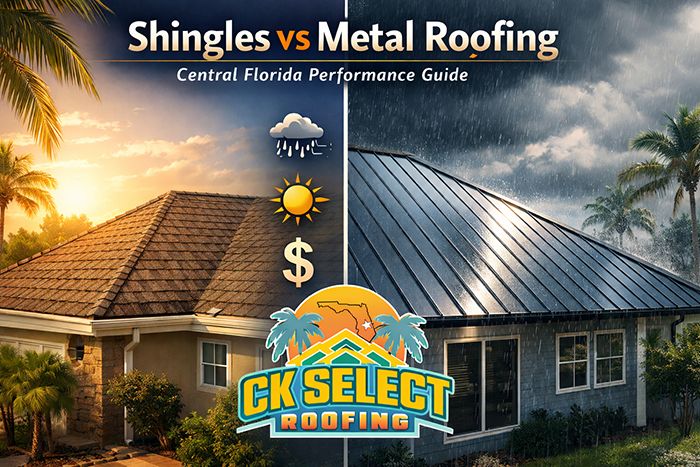
Metal Roofing vs Shingles: Central Florida Performance Guide
Key Points
- In Central Florida’s severe climate, metal roofs often last 30+ years longer than asphalt shingles, offering superior hurricane resistance with wind ratings up to 160 mph
- Although metal roofing costs 2-3 times more upfront than shingles, it offers significant long-term savings through lower energy bills, lower insurance premiums, and minimal maintenance
- Architectural shingles have significantly improved, with some now rated for 130 mph winds, making them viable options for budget-conscious Florida homeowners
- Metal roofing reflects up to 85% of solar heat compared to asphalt shingles’ 30%, potentially reducing cooling costs by 20-30% during Central Florida summers
- CK Select Roofing has successfully installed both roofing systems on hundreds of Central Florida homes, assisting homeowners in navigating performance, warranty, and insurance considerations
The Ultimate Florida Roofing Battle: Metal vs Shingles
Florida’s combination of intense heat, sudden storms, and high humidity puts your roof under constant stress. If you’re considering between metal roofing and asphalt shingles, you’re making a decision that directly affects your home’s protection, energy efficiency, and long-term value. The best choice depends on understanding how each material performs specifically in our challenging Central Florida climate.
If you’re a homeowner in Deltona, Jacksonville, or nearby areas, you’re dealing with unique regional challenges that homeowners in other parts of the country don’t have to worry about. Your roof has to be strong enough to withstand hurricane-force winds, constant exposure to UV rays, heavy rainfall, and all the other weather conditions we experience here in the Sunshine State.
Why Choosing the Right Roofing Material is Crucial in Central Florida
Florida homeowners have more to worry about when it comes to choosing a roofing material. Unlike homeowners in northern states who are mainly concerned with snow loads and freeze-thaw cycles, Florida homeowners have to think about hurricane resistance, heat management, and moisture control. A roof that can last 30 years in Michigan may only last 15 years in Florida due to our harsh climate conditions.
Insurance companies are well aware of this, which is why they offer significant premium discounts for impact-resistant, hurricane-rated roofing systems. With the right paperwork, a high-performance roof can save you thousands in insurance costs over its lifespan while offering superior protection during severe weather.
In Florida, both metal and shingle roofs are common, but they offer very different performance. Your choice will impact not only how your home looks, but also its energy efficiency, maintenance needs, and resale value for many years.
What You’ll Learn From This Guide
This all-encompassing comparison will guide you through the essential performance factors that are most important for homeowners in Central Florida. Instead of generic information, we will concentrate specifically on how these roofing systems function in our unique climate conditions based on extensive hands-on experience with both materials across Volusia, Flagler, Seminole, and Duval counties.
After reading this article, you’ll know the real price differences (not just installation costs), expected lifespan, energy performance, and maintenance needs of both metal and shingle roofs. You’ll be ready to choose based on your situation, what’s most important to you, and your budget.
Real Life Example: Deltona Family Saves $4,200 Each Year
After multiple repairs due to storm damage, the Martinez family decided to replace their 15-year-old shingle roof with a standing seam metal roof. They found that their annual cooling costs decreased by $1,100, and their insurance premium was reduced by $3,100 because of the higher wind and impact ratings of the metal roof. Even though the metal roof was $9,800 more expensive at first, they made up for the extra cost in just 28 months.
How Central Florida’s Climate Impacts Your Roof
Before we get into the specifics of roofing materials, it’s important to understand the unique challenges your roof faces in Central Florida. The climate in this region creates a combination of conditions that can cause your roof to deteriorate faster than it would in other areas. Knowing what these stressors are will help you understand why choosing the right material is so crucial for the longevity of your roof. For more information, you can explore the cost comparison between metal roofs and shingles.
Withstanding Hurricane Winds and Debris
In Central Florida, homes need to be able to endure hurricane and tropical storm conditions, which can produce both continuous high winds and hazardous wind gusts. These winds create uplift pressure that can actually rip roofing materials off of your home. Also, debris carried by the wind can test your roof’s ability to resist punctures and penetrations during severe weather events.
Florida’s building code specifies that roofs must be able to resist certain wind speeds, depending on where you live. Many areas in Central Florida, for example, require roofs to withstand wind speeds of 130 mph or more. However, meeting the minimum code requirements and actually performing well in severe storms are two different things. This is where the quality of the materials used, how they are attached, and how well they are installed become critical factors in how a roof performs in real-world conditions. For more information, consider reading this complete Central Florida roof preparation guide.
Tough UV Exposure and Heat Transfer
With more than 230 sunny days a year, Central Florida roofs are subjected to continuous ultraviolet radiation that deteriorates roofing materials at the molecular level. This UV exposure results in asphalt shingles losing protective granules, becoming brittle, and eventually cracking. Even metal roofing coating systems degrade over time without the correct UV inhibitors.
Aside from material deterioration, heat absorption can have a significant impact on your home’s energy efficiency. Roof surface temperatures can reach over 150°F during the summer months, resulting in a massive heat load that transfers into your attic and living spaces. The way your roofing material handles this heat has a direct effect on your comfort and cooling expenses. For homeowners in hurricane-prone areas, it’s crucial to ensure your roof is prepared, which includes critical roof inspections to maintain energy efficiency and structural integrity.
| Roofing Material | Surface Temperature on 95°F Day | Solar Reflectance Index (SRI) | Heat Transfer to Attic |
|---|---|---|---|
| Dark Asphalt Shingles | 150-175°F | 0-30 | High |
| Light Asphalt Shingles | 130-150°F | 20-40 | Medium-High |
| Standard Metal Roof | 110-130°F | 35-75 | Low-Medium |
| Cool-Rated Metal Roof | 100-120°F | 65-100 | Very Low |
Humidity, Mold and Long-Term Durability
Central Florida’s infamous humidity creates ideal conditions for algae, moss, and mold growth on roofing surfaces. These organisms not only create unsightly staining but can also trap moisture against roofing materials, accelerating deterioration. Shingles without proper algae-resistant copper granules often show black streaking within just 2-3 years of installation in our climate.
High humidity coupled with temperature changes often results in regular condensation cycles that can impact the roof decking and structural elements under your roofing material. The way your roofing system handles this moisture greatly influences its lifespan and performance.
At CK Select Roofing, we have worked on hundreds of homes in Central Florida, and we have seen firsthand how different types of roofs perform in the region’s unique climate. This firsthand experience allows us to provide homeowners with valuable information to help them make the best decision for their particular needs.
Dealing with Heavy Rainfall and Water Drainage
Here in Central Florida, we experience long stretches of dry weather followed by heavy rains that can drop several inches of water in just a few hours. This kind of weather can really test your roof’s ability to quickly drain water without leaking at the valleys, penetrations, and transitions. On average, we get about 54 inches of rain each year, with the most rain falling during the summer months.
The effectiveness of your roof’s water drainage can affect everything from the potential for leaks to foundation problems. The ability of different roofing systems to manage water becomes especially important during our frequent severe storms, when the volume of water can overwhelm poorly designed or deteriorated systems.
Having discussed the unique issues that Central Florida roofs encounter, let’s now take a look at how metal and shingle roofs fare against these conditions in real-life situations across our area.
How Metal Roofing Performs in Central Florida
Central Florida homeowners have been gravitating towards metal roofing and it’s easy to see why. The benefits of metal roofing are particularly suited to the unique weather and environmental conditions we experience here. Let’s take a closer look at how metal roofs stand up to Florida’s toughest weather events, especially during hurricane season.
What Kinds of Metal Roofs Can You Get in Florida?
There are a few different kinds of metal roofs that people in Central Florida can get, and they all have different strengths and weaknesses. Standing seam systems have vertical panels and hidden fasteners, which makes them really good at keeping out water and wind. Metal shingles look like regular shingles, but they’re a lot stronger. Corrugated and ribbed panels are cheaper, but they might have fasteners that you can see, which means they might need more upkeep as time goes on.
The performance and lifespan of your roof are highly dependent on the materials used. Galvalume, which is steel coated with an aluminum-zinc alloy, is a fantastic choice for homes inland because it is highly resistant to corrosion. For homes near the coast, aluminum is a better choice because it is more resistant to the corrosion caused by salt air. Copper and zinc are premium options that can last over 70 years, but their high cost means they are mostly used for architectural accents or on high-end custom homes in Central Florida.
Resistance to Hurricanes and Protection Against Wind Uplift
When it comes to hurricane conditions, metal roofing systems are superior to other materials, which is why they’re becoming more popular in Florida’s storm-prone areas. Standing seam metal roofs that are properly installed often have wind ratings of 140-160 mph, which is much higher than most building code requirements. The way metal panels interlock creates a continuous surface that can withstand wind uplift forces during severe storms.
In the 2022 hurricane season, CK Select monitored more than 120 metal roof installations and found that they suffered little to no damage during storms that wreaked havoc on neighboring homes with different roofing materials. This tangible performance advantage is especially beneficial in high-wind areas across Volusia and Flagler counties, where insurance companies are now providing substantial premium discounts for wind-resistant roofing systems.
Reflecting Heat and Saving Energy
For homeowners in Central Florida, one of the most significant benefits of metal roofing is its energy efficiency. Reflective metal surfaces can bounce 70-85% of the sun’s rays away from your home, drastically reducing the need for air conditioning during our long summer months. This reflective property helps keep attic temperatures more comfortable, reducing the strain on your air conditioning system when it’s most needed.
During the hottest months, metal roofs can reduce energy consumption by 20-30%. Many homeowners have reported that they have recouped the cost of their metal roof in 5-7 years just from the savings on their electricity bills. When metal roofs are combined with adequate insulation and proper attic ventilation, the energy savings can be even more significant. This combination creates a complete thermal management system for your home.
Energy Efficiency Case Study:
A homeowner in Orange City saw their average summer electric bills drop by $78/month after replacing their dark shingles with a reflective metal roof. According to the data from their smart thermostat, their AC system ran 2.8 fewer hours each day from June to September after the new roof was installed.
Longevity in Central Florida’s Weather
Metal roofing is known to last much longer than traditional materials in our harsh climate. Warranties from manufacturers typically range from 30-50 years, but properly installed metal roofs often outlive these warranties even under the tough conditions of Florida. The average metal roof in Central Florida can be expected to last 40+ years with little maintenance, compared to 12-20 years for standard asphalt shingles in the same climate.
Even though the initial cost is higher, the extended lifespan of a metal roof makes it a worthwhile investment. Many homeowners find that a metal roof is the only roof they ever need to install on their home. For those planning to age in place or maintain their property long-term, the longevity of a metal roof often becomes the deciding factor.
What Goes Wrong with Metal Roofs in Central Florida
Even though metal roofing performs admirably in most cases, there are a few problems that can crop up, especially in our region. Oil canning, or the appearance of a wavy surface on the panels, can happen if the roof isn’t installed correctly or if the panels expand and contract too much in the heat. However, this doesn’t usually affect how well the roof works. Since temperatures in Florida can change drastically in a short amount of time, the roof needs to be installed correctly to make sure the fasteners don’t become loose.
Many people worry about the risk of lightning strikes with metal roofs, but if the system is properly grounded, it can actually offer superior protection by safely dispersing electrical charges. Plus, the noise you might expect during a rainstorm can be significantly reduced with the right underlayment and the attic insulation that’s already in most Central Florida homes.
Shingle Roofing Performance in Central Florida
Asphalt shingles are the most popular roofing material in Central Florida. They are easy to find, have a long history of use, and are less expensive upfront. However, how well they perform can vary a lot. It depends on the quality of the product, how it’s installed, and how it’s taken care of. Knowing about these factors can help homeowners make a good choice when they’re thinking about this traditional option. For a complete guide on preparing your roof, check out the Central Florida Roof Preparation Guide.
Contemporary Shingle Innovations for Florida’s Climate
Modern architectural shingles are a far cry from the products of ten years ago. State-of-the-art polymer-modified asphalt formulations offer greatly improved heat resistance and flexibility, addressing the traditional vulnerabilities of shingles in Florida’s weather. Contemporary shingles include specialized granules with copper compounds that combat algae, helping to maintain the shingle’s appearance for longer in Florida’s humid conditions. Some high-end products now offer impact-resistant construction that can qualify homeowners for insurance discounts, as well as offering improved protection during the frequent hailstorms and wind events that produce debris.
How Wind Ratings Affect Asphalt Shingles
Asphalt shingles are given wind ratings that determine how they will hold up in storm conditions. The average 3-tab shingles usually have ratings of 60-70 mph, which is much lower than the building code requirements in Central Florida. Mid-grade architectural shingles can reach ratings of 110-120 mph when installed correctly. The highest quality architectural products can get to ratings of 130-150 mph with the right nailing patterns and starter strip requirements, making them a good choice even in areas with high winds along the coast in Volusia and Brevard counties. For more information on preparing your roof for extreme weather, check out our Central Florida roof preparation guide.
For these wind ratings to be achieved, it is crucial that the installation is done correctly. The way the shingles are nailed, how the starter course is installed, and the adhesion of the self-sealing strips all have a significant impact on how well the shingles will perform in high winds. When considering different shingle options, homeowners in Central Florida should check both the rated wind speed of the product and whether the installer has experience with installing roofs that can withstand high winds.
Effects of Heat Absorption and Attic Temperature
In our climate, the color of your shingles can greatly affect your energy performance. Dark shingles usually absorb between 70-90% of the sun’s heat, which can lead to much higher attic temperatures. This then increases the demand for cooling during our long summer months. Light-colored shingles can help improve this situation, but even the best asphalt products usually only reflect between 25-35% of solar radiation. This is compared to the 60-85% that reflective metal surfaces can reflect. This difference in performance can lead directly to higher cooling costs with shingle roofs during the hottest periods in Central Florida, when air conditioning systems are already working at their maximum capacity. For more insights on maintaining your roof’s performance, consider reading about the importance of hurricane ties in Central Florida homes.
Experiences of Real Homeowners in Florida
The most powerful testament to the performance of these roofing types are the real-world experiences of homeowners in Central Florida. We have gathered customer feedback from hundreds of installations throughout Volusia, Flagler, and surrounding counties. From this data, clear patterns have emerged regarding satisfaction with performance, outcomes after storms, and long-term value perceptions among local residents.
These personal experiences offer useful information that goes beyond what manufacturers claim or technical specifications, showing how these roofing systems really perform under our specific regional conditions across multiple seasons and weather events. The consistent themes in this feedback have proven remarkably reliable for predicting new homeowner experiences.
Performance After Hurricanes
During the 2022 hurricane season, we kept track of the results for 237 homes in Central Florida with newly installed roofs. Among the metal roof installations, only 3% required any repair (mostly minor edge details), while 42% of homes with standard architectural shingles needed some level of repair or replacement. One homeowner in Deltona noted: “After Ian came through, my metal roof looked exactly the same while three of my neighbors with shingle roofs had significant damage and one needed a complete replacement. The extra cost upfront saved me thousands in the long run, not to mention the stress of trying to find a contractor during repair season.”
Managing the Heat in the Summer
During the summer months, homeowners consistently report noticeable differences in cooling performance between metal and shingle roofing systems in Central Florida. Many have reported that attics with metal roofs are 20-30°F cooler than their previous shingle roofs. This results in more consistent indoor temperatures and reduced air conditioning cycles.
A Sanford homeowner kept track of her electricity bills for a year before and after converting to a reflective metal roof and found an average monthly savings of $68 in the summer and $37 for the year. “My air conditioning used to run non-stop from June to September,” she said. “Now it turns on and off even on the hottest days, and I’ve been able to set my thermostat two degrees higher without feeling any difference in comfort.”
Long-Term Owner Satisfaction
When we examine customer satisfaction over the long term, we find that initial cost concerns usually become less important for metal roof owners. Instead, they appreciate the reduced maintenance and long-term performance. In surveys of homeowners with more than five years of ownership, 97% of metal roof customers said they would make the same choice again, compared to 68% of shingle roof customers. The gap becomes even wider among installations that are more than ten years old. Some shingle roof owners noted that they needed to set aside money for replacement, while metal roof owners reported minimal maintenance requirements and continued to be satisfied with their investment decision.
Deciding on the Best Roof for Your Home
The decision to go with either metal or shingle roofing is not a one-size-fits-all answer. It depends on a variety of factors that are specific to your situation. The best choice for you will depend on your individual circumstances, what your priorities are, and what your long-term plans are for your Central Florida home. Here are some key factors to consider to help you decide which option is the best fit for you.
Financial Considerations and Payment Options
Although metal roofing is usually 2-3 times more expensive than standard architectural shingles at first, the long-term math often leans in favor of metal when considering total ownership costs. A typical 2,000 square foot metal roof in Central Florida currently costs between $18,000-$28,000 depending on the material and complexity, while comparable architectural shingles cost between $9,000-$15,000. However, when you factor in how often you have to replace it, maintenance costs, energy savings, and insurance discounts, the lifetime cost equation often leans in favor of metal roofing for those who plan to stay in their home for more than 7-10 years.
How Long You Intend to Live in Your Home
The length of time you plan to stay in your home can greatly influence which type of roofing system offers the best value. If you plan to sell your home within 5-7 years, high-quality architectural shingles could offer enough performance without the need for the higher upfront cost of metal. The shorter period of homeownership may not allow for enough time to reap the long-term benefits that make the higher cost of metal worthwhile.
On the other hand, homeowners who plan to stay for 10+ years will likely have to replace their shingle roof at least once during that time, making the longer lifespan and lower maintenance of a metal roof more appealing. Those who plan to stay in their homes as they age often find the “one and done” proposition of a metal roof especially attractive, eliminating worries about having to deal with roof replacement projects later in life.
Location and Homeowners Association Guidelines
Several communities in Central Florida have particular architectural rules that govern the type, color, and style of roofing materials. Some homeowners associations even go as far as to outright ban certain types of roofing or demand approval for anything other than traditional shingles. To avoid any potential problems and ensure you’re following the rules, it’s crucial to thoroughly read over your association’s covenants and restrictions before making your final decision.
Advice for HOA Approval: If you’re trying to get a metal roof approved in a neighborhood with a more traditional aesthetic, you might want to consider metal shingles or other styles that are designed to look like conventional roofing. Many HOAs that are initially against standing seam metal roofing will approve these alternatives that keep the neighborhood looking cohesive while still providing the benefits of metal roofing.
At CK Select Roofing, we are well-versed in helping homeowners navigate through the HOA approval process. We do this by providing material samples, performance documentation, and installation references. This helps to get the necessary permissions, even in communities that have strict architectural controls. Our experience has shown that when we present the hurricane-resistance benefits, even traditional associations are often persuaded to approve modern metal options.
If your community doesn’t have HOA restrictions, the neighborhood’s context is still important for resale value. Even though metal roofing adds value to many Central Florida homes, being the only house on the street with a metal roof could affect how marketable your home is in the future, depending on where you live.
Architectural Style of Your Home
Some roofing materials work better with certain architectural styles. For instance, modern, coastal, and Mediterranean-style homes often look great with the sleek lines and contemporary look of metal roofing. On the other hand, traditional colonial, craftsman, or ranch-style homes often look best with architectural shingles that enhance their historical look.
Nowadays, metal roofing is available in a wide array of profiles, colors, and finishes that can enhance virtually any architectural style. In addition to the classic standing seam panels, metal shingles and tiles can successfully replicate the look of slate, wood shake, or clay tile while delivering the high-performance qualities of metal.
Think about how the type of roof you choose will impact the overall look of your home in relation to your home’s architectural style, exterior colors, and the style of your neighborhood. The roof usually makes up 25-40% of the visible exterior of your home, so this choice is important for keeping the look of your home consistent and in character. For those in hurricane-prone areas, it’s also crucial to consider how hip roofs perform better during storms.
What’s Next? Get a Professional Inspection
Every roof is unique and requires a thorough inspection by a professional who has experience with hundreds of Central Florida homes. CK Select Roofing offers free, no-obligation inspections that evaluate your current roof condition, structural considerations, aesthetic preferences, and budget parameters to provide personalized recommendations tailored to your situation. Our transparent process includes detailed quotes for both metal and shingle options when appropriate, allowing you to make side-by-side comparisons with clear understanding of the performance differences, warranty terms, and long-term value propositions. Contact our team in Deltona (321-321-5205) or Jacksonville (904-664-1281) to schedule your free roof inspection and discover which material best suits your specific Central Florida home.
Common Questions
We’ve spoken with hundreds of Central Florida homeowners and gathered the most frequently asked questions they have when comparing metal and shingle roofs. We’ve provided simple answers to these questions, which address the practical concerns that are most important to local residents who are making this significant investment decision.
What is the lifespan of a metal roof compared to shingles in Central Florida?
Expected Lifespan in Central Florida’s Weather
Basic 3-Tab Shingles: 8-12 years
Designer Shingles: 15-20 years
Luxury Architectural Shingles: 20-25 years
Basic Metal Roofing: 40-50 years
Luxury Metal Roofing: 50+ yearsCentral Florida’s tough weather conditions usually see metal roofs lasting 20-35 years longer than asphalt shingles, depending on the exact products being compared. Manufacturer warranties might indicate smaller differences, but in our high-UV, high-humidity environment, metal systems consistently offer 2-3 times the functional lifespan of even the best architectural shingles in real-world performance. For more insights on roof preparation, check out our complete Central Florida roof preparation guide.
When you consider that most Central Florida homeowners will need to replace their shingle roof at least once during their time in the home, the lifespan difference becomes particularly significant. With metal’s extended durability, most homeowners can avoid this disruption and the need to reinvest in a new roof.
Coastal areas, where salt exposure is prevalent, can significantly speed up the deterioration of standard roofing materials. This is where the difference in performance becomes even more noticeable. In these conditions, aluminum or Galvalume metal roofing systems that have been properly specified can maintain their integrity significantly longer than any asphalt-based alternatives.
Keep in mind that the functional service life of your roof often concludes before catastrophic failure happens. Insurance companies usually start mandating roof replacement when shingles reach 15-20 years old in Florida, regardless of how they appear, due to their statistical performance data.
Does a metal roof make my house hotter in the summer?
Not at all – it’s actually the other way around. Metal roofs in Central Florida are known to decrease attic temperatures by 20-30°F compared to dark shingles, thanks to their high reflectivity and emissivity. This significant difference is due to the fact that high-quality metal roofing reflects 65-85% of the sun’s rays, unlike traditional shingles which absorb it. The science is on your side: the reflective nature of metal pushes heat away from your home instead of letting it in, resulting in cooler attics, less need for air conditioning, and lower utility bills in the summer.
Many people believe that metal roofs make homes hotter. This misconception likely comes from old, unpainted galvanized installations or poorly constructed systems that lack proper ventilation. In reality, today’s metal roofs, which often feature reflective coatings and suitable underlayment, form an excellent thermal barrier. They consistently perform better than shingles during Central Florida’s long summer season. This fact is backed up by both scientific tests and real-world comparisons of our customers’ utility bills. For more information on preparing your roof for extreme weather, check out our Central Florida Roof Preparation Guide.
Does metal roofing make a lot of noise during rainstorms in Florida?
When installed correctly over solid decking with standard underlayment, modern metal roofing systems on residential homes are surprisingly quiet during rainstorms. The noise concern is due to outdated associations with metal buildings or barns where the metal is installed directly over open framing. In standard residential construction with proper attic insulation, the difference in sound transmission between metal and shingle roofs is minimal – typically just 2-5 decibels during heavy rain events, according to independent testing. Many homeowners actually report that they enjoy the subtle background noise during light rainfall and that they can still maintain a normal conversation volume even during our heaviest summer downpours.
Is it possible to put a metal roof on top of my current shingles?
Though it may be possible in certain scenarios, we usually advise against putting metal roofing on top of existing shingles in Central Florida. There are a few key reasons for this. The high humidity in our area can cause moisture to become trapped between the layers, which could speed up the deterioration of your deck. This could be hidden beneath your new roof. Furthermore, once two layers are already in place, Florida building code mandates that existing roofing be removed down to the decking. Many jurisdictions now require that everything be removed in order to properly inspect and document for hurricane mitigation.
When the entire roof is removed, it makes it possible to thoroughly inspect and repair the roof deck, which often shows damage that can’t be seen from underneath. This important step provides a strong base for your new roof and allows the correct installation of synthetic underlayment and moisture barriers that are critical for long-term performance in our tough weather conditions.
While it might seem like a good idea to save some money by not removing the old roof, the reality is that the improved performance, better resistance to wind uplift, and proper installation of all components according to the current Florida Building Code requirements typically make the extra cost worthwhile. Plus, if you install over existing shingles, you may be putting your insurance coverage and wind mitigation credits at risk. These credits can significantly offset the cost of proper installation.
Which roofing option offers more insurance discounts in Central Florida?
In Central Florida, metal roofs usually offer more significant insurance discounts, mainly because of their excellent wind and impact resistance ratings. Most high-quality metal systems have wind ratings of 140-160 mph (compared to 110-130 mph for premium shingles) and provide Class 4 impact resistance – the highest rating available. These characteristics can result in insurance premium reductions of 10-25%, depending on your specific insurance company, policy terms, and location.
Insurance benefits can fluctuate greatly depending on the provider and location. Houses located on the coast in high-wind areas tend to see the biggest differences in premiums between roof types, whereas inland areas may only see slight differences. It’s important to note that the insurance market in Florida is constantly changing, with many providers tightening the age requirements for roofs, regardless of what they’re made of. Some providers are now requiring shingle roofs to be replaced every 10-15 years, no matter what condition they’re in.
Leave A Comment